
• Skip to primary navigation
  • Skip to main content
  • Skip to primary sidebar
  • Home
  • Collaborate with us
  • Contact

Serena Lissy logo

  • Recipe Index
  • Privacy Policy
menu icon
go to homepage
  • Christmas
  • Recipes
  • Photography
  • About
    • Facebook
    • Instagram
    • Pinterest
  • search icon
    Homepage link
    • Christmas
    • Recipes
    • Photography
    • About
    • Facebook
    • Instagram
    • Pinterest
  • ×

    Serena Lissy » Recipes

    Blog

    5 Tips For Getting Started In Food Photography

    July 16, 2021

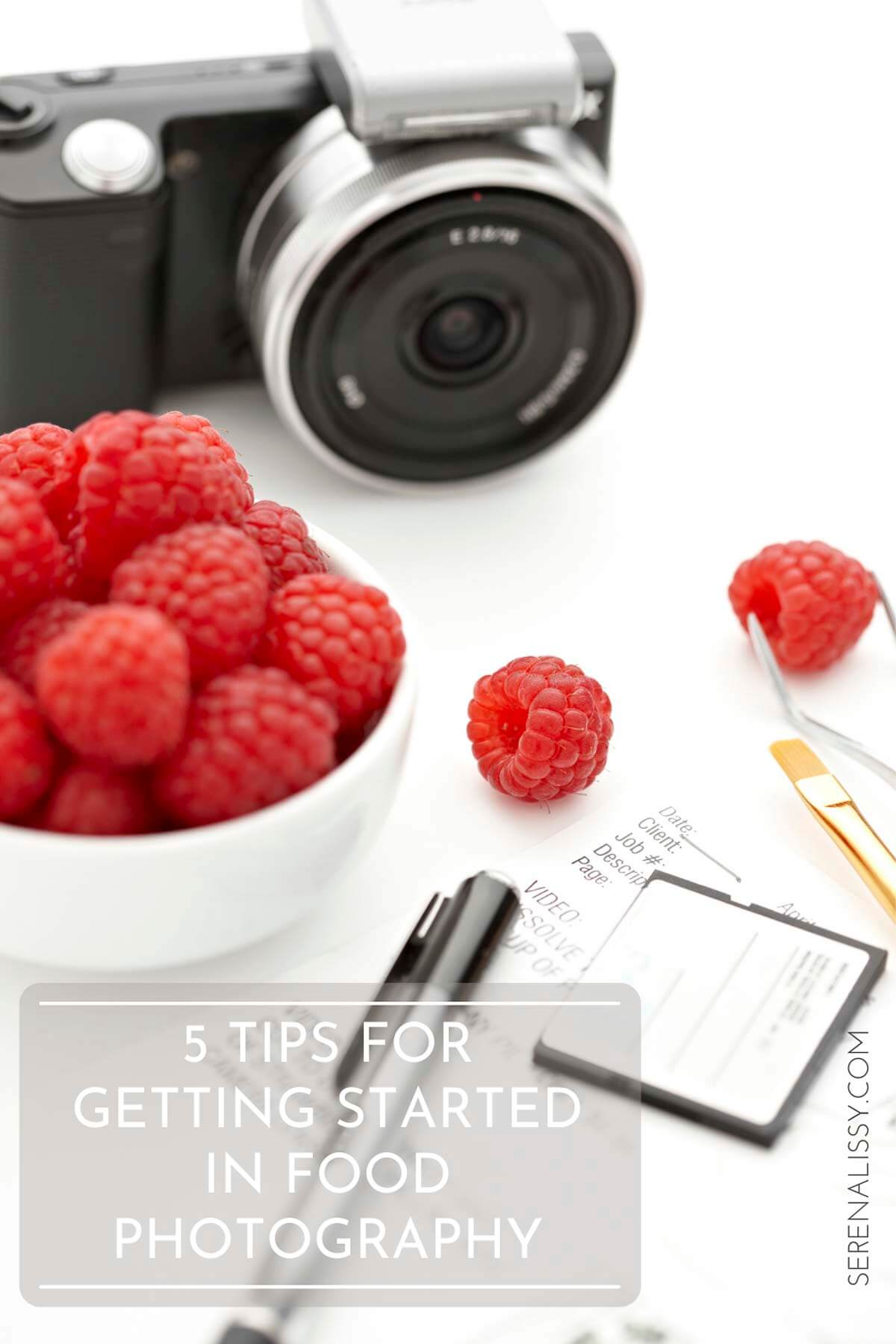
    Raspberries and a camera on tabletop

    Did you know that 25% of food photos shared online are seemingly posted for no special occasion? These include food diary posts and food diaries. In comparison, 22% of food photos shared online display the process of food creation and final products.

    Food is personal, beautiful, and powerful. Personally, we love talking about both photography and food here. However, I’m overjoyed by the fact that sweets and desserts lead the pack in shared food photos, with 18% of shared photos including dessert.

    Whether you’re interested in getting started with a career in food photography or upgrading your memory-preserving game on your Instagram account, your journey can start with a few simple lessons and a smartphone. Here are our favorite ways and areas to focus on when getting started in food photography.
    Raspberries and a camera on tabletop

    Stylizing Food

    Of course, your food photography journey can’t begin without some beautiful foods to photograph! If you’re a baker or chef, you might be all set and ready to go with your favorite recipes or a few of our favorites.

    Here on SerenaLissy.com, we have a variety of delicious baking recipes to choose from. We are even planning to start a themed monthly baking challenge perfect for beginners and experts alike. We even announce a winner at the end of each month!

    A good first step is practicing your favorite recipes, and exploring new ones will make your dishes more predictable on each bake. The use of props and a bit of food styling will also make them more beautiful as well. While messier food preparation is just as delicious (and sometimes more delicious) than dainty, smaller dishes, you’ll want a clean-set dish when pursuing your food images.

    Must-Have Food Photography Gear

    Photography gear can range in accessibility and price from using your smartphone to purchasing a professional camera for $1000+. Of course, more professional options will always produce better shots in the hands of a professional. However, the differences can be marginal, especially when first starting out with photography.

    Instead of worrying about dropping thousands on a fancy camera, it’s important to learn about all of the options for taking photos your current camera or smartphone has. For example, many smartphones allow for white balancing, manual focus, and more, which can get you far alongside professional camera shots.

    A tripod, on the other hand, is a must-have. These can ensure that you have the same set-up for final product shots or for baking shots. One popular option is this tripod from UBeesize, which is appropriate for both digital cameras and smartphones. This tripod is an extremely inexpensive starter tripod. I know many people are averse to using a tripod, but it is essential to avoid camera shake and to get great photos.
    Flour and eggs on a table

    Let’s Talk Photography Lighting

    While photography lighting definitely qualifies as photography gear, your choices here are a bit extensive. The easiest type of lighting (and most affordable) is ambient lighting. Ambient lighting is defined by any lighting that isn’t added to a scene by you.

    Direct sunlight, streetlights, and any light from reflections all qualify as long as you aren’t the one controlling where the light lands. This type of light is ideal when you’re starting out and potentially setting up a shoot area next to a window. Let's also quickly talk about the cost of natural lighting... Can we say free!

    Another option is to invest in a photography lightbox. A lightbox has all-white sides lit by LEDs along the edge of the box or behind the walls. These often also come in different colors or have inserts that can help change colors when wanted.

    The one limitation of lightboxes is their size since fully set-up dining sets or extensive baked goods lines won’t fit inside one lightbox of 2 square feet. But if you can work with the size limitation, this is great for blocking out any cluttered backgrounds you may have.

    Finally, you can opt for softbox lighting, umbrella lighting, ring, and LED lighting. While softbox and umbrella lighting provide a soft light on subjects, they can also be used for more harsh lighting and angles. I've used artificial lighting for years. It takes a bit of time to understand all the pieces, but it's well worth investing in the time it takes to learn.

    Communicating Mood through Photography

    Photos have the power to create sales, push awareness and even change your mood. When it comes to commercial product photographers, the goal is to communicate brand value and increase sales of a product at the end of the day. The goal of a professional food photographer is to sell that product, whether it's a piece of cake from a food blogger's recipe or a bottle of soda.

    And yet, even marketing-focused photography can benefit from dramatic effects, product lighting, and layout when it comes to both sales and mood. With the correct lighting, even two-dimensional images can feel three-dimensional.

    You can read more about the intersection of commercial photography and personal touch on our previous post on A Professionally Produced Photograph Isn’t Just a Luxury.
    Eggs, flour and rolling pin on table

    Taking a Photography Course

    Some of us learn more effectively in a classroom setting. Whether you choose to pursue a degree in photography at a local college or enroll in a handful of in-person or online classes, there are many benefits to learning food photography by taking a photography course.

    Some photography courses (particularly in-person ones) offer access to equipment for free or on a rental basis while you learn. Courses can be a great way to try out a variety of different equipment without breaking the bank.

    Additionally, having an expert teacher or mentor can quicken your learning pace. Forget searching through online forums or old YouTube videos for camera solutions! Your teacher should be able to help you get where you need to be in seconds.

    Your teacher or professor can also be a great resource for feedback on your food photography, giving you professional advice and mood checks on pieces you may not normally be able to get feedback on. Even better if you’re in a class with numerous students available to connect with! Getting peer reviews makes a huge difference in your journey to becoming a food photographer.

    Finally, taking a certification or degree course in photography can lend you credibility when working with future clients or bosses.

    Getting Started in Food Photography at Home

    When getting started on your food photography journey, don’t forget that some of the best things to take photos of are already in your home! A lunch salad, dinner of pork chops, or even a simple bowl of cereal can give you plenty of test subjects. Are you drinking a cup of coffee while reading this? Well, there you go, get some props and set up a good shot to practice with. Doing this daily will greatly expand your creative process. And remember, the best camera is the one you have with you. Don't be afraid to use your mobile phone while learning. Put it in manual mode and get some great photographs of food.

    Ready to jumpstart your learning? Read our article on Camera Modes: A Beginner’s Guide to Camera Settings or Six Tips For Finding The Best Camera For Food Photography on SerenaLissy.com and stick around for more food photography tips and tricks alongside baking adventures.
    Food Photography Challenge

    Five Day Food Photography Challenge

    Want to take your food photography up a notch?

    I’ve been photographing food for years and have learned some tricks of the trade. Join me on this 5-day challenge where you’ll learn how to master the art of food photography, one bite at a time. You’ll be amazed by what you can do with just a few simple tips. You will learn how to make your photos pop with color, texture, and lighting. Sign up today!

    As an Amazon Associate and member of other affiliate programs, I earn from qualifying purchases. What that means is if you click on one of our affiliate links, they may toss a few pennies our way for a commission.
    How To Use The Color Wheel In Food Photography

    July 15, 2021

    Color Wheel

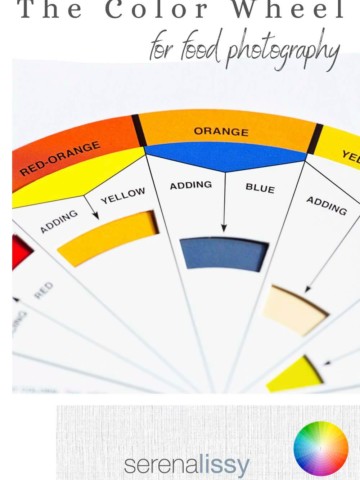
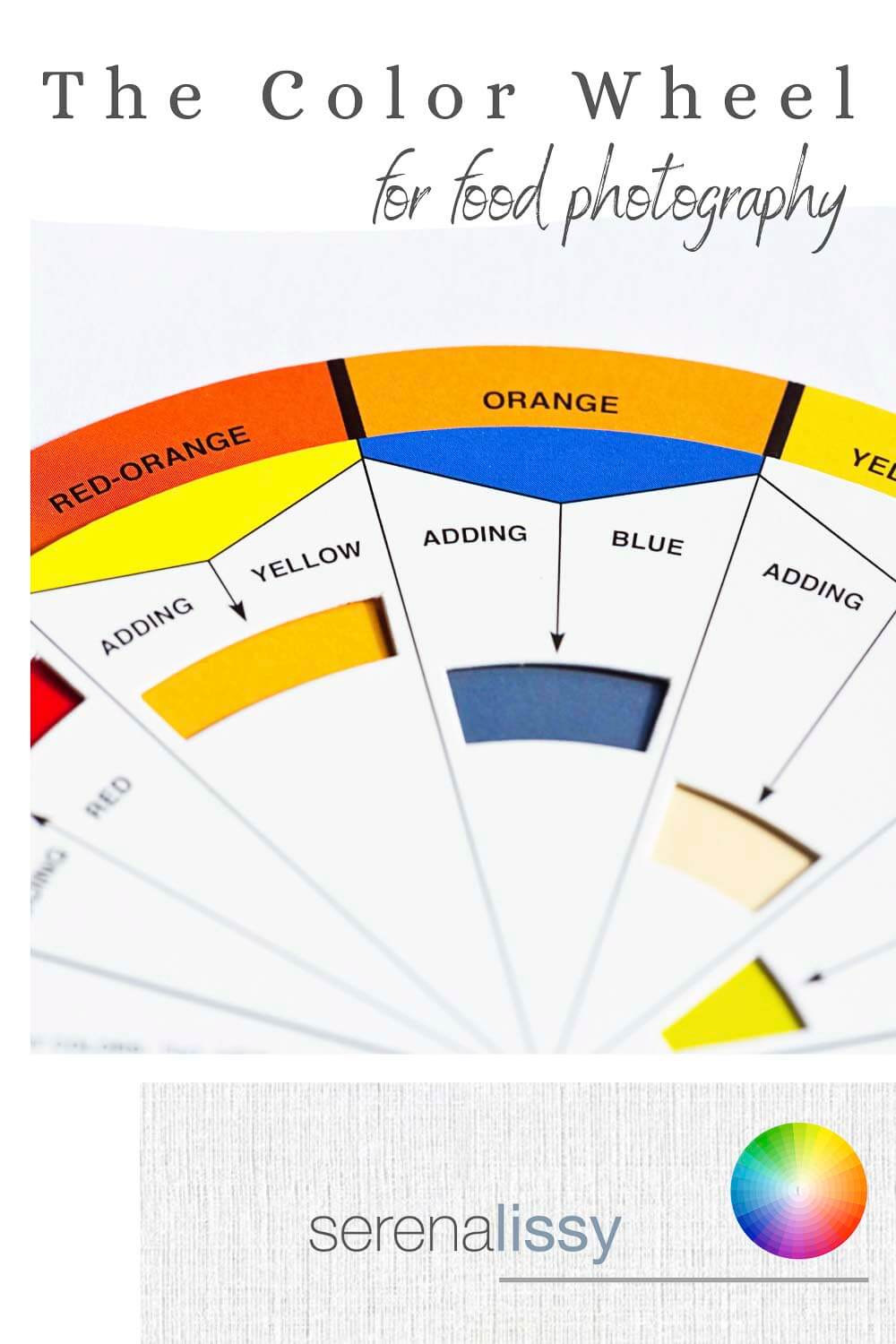
    A color wheel is a versatile tool that you can use in many different ways for many different purposes, which may help you create some amazing food photography. Have you ever tried desperately to make a photo or piece of art perfect, only to fail or feel like something is vaguely off about your project? Your color palette might be behind that feeling in your photo.

    Color theory can be traced back to Sir Isaac Newton’s experiments with prisms. His theory that red, yellow, and blue are the three primary colors is shown in his own wheel. Many people from the 1800s agreed with him. Although this theory is not completely true, it was very influential on other color wheels and theories of today.

    Color Wheel

    Studying color theory is a great way to meld artistry and science together. All kinds of visual art, from painting to pastry-making, benefit from an eye for art and design. Color theory offers a reliable, practical way to orchestrate art through tried and true color combinations and guidelines.

    For starters, it's important to know what color theory means in photography terms. Color Theory refers to all the aspects of the color relationship, such as hue (color), value (brightness), and temperature (warm or cool). It's these relationships that help create an interesting photo with contrast and depth.

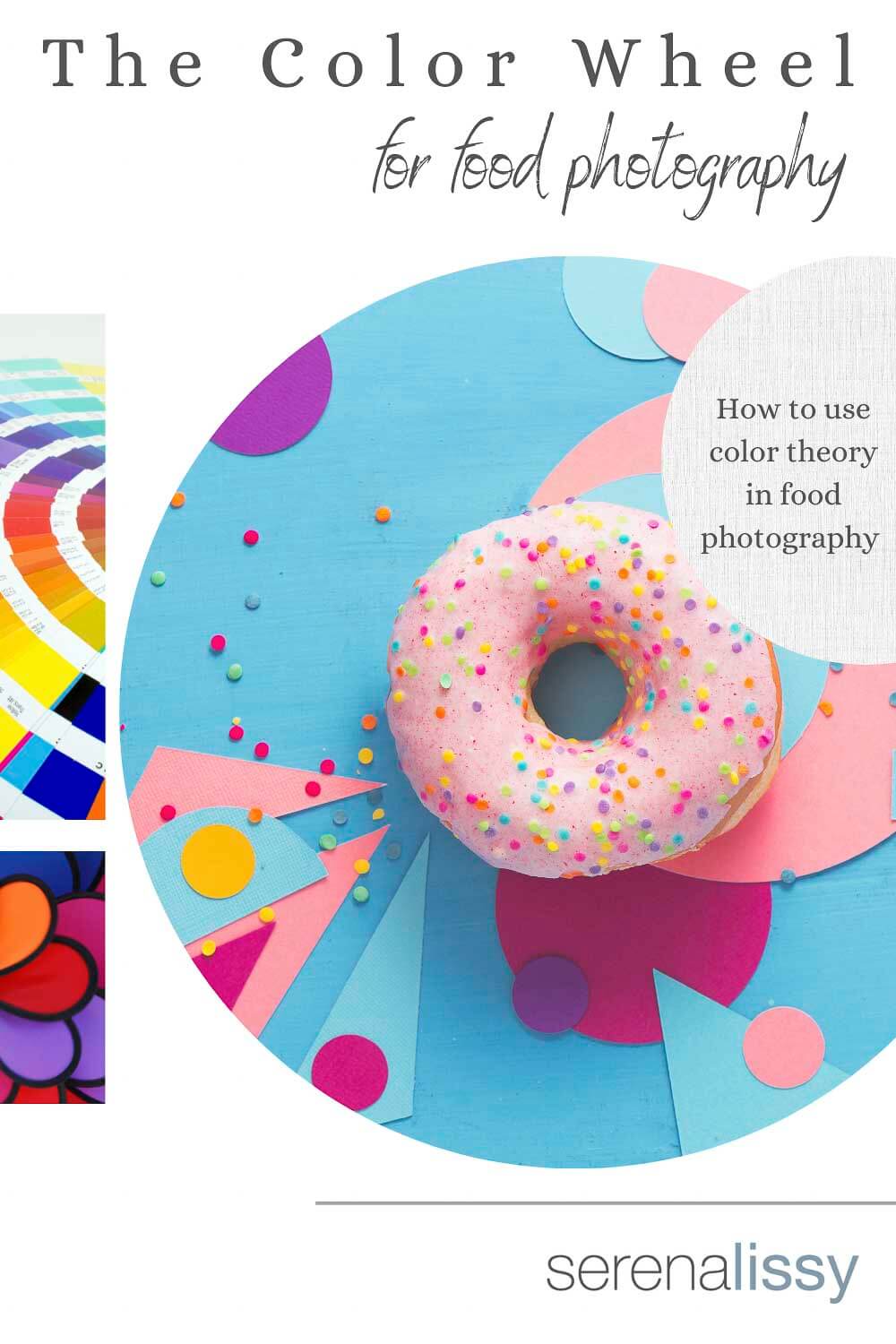
    Today, we’re taking a look at color theory, also known as color schemes, and how tried and true methods of mixing and marrying colors and hues can improve your food photos by leaps and bounds.

    Color Wheels: Primary, Secondary, and Tertiary Color

    The simplest way to think of color theory is to consider it a method to choosing colors effectively. Learning about color wheels and how to pair colors is a good start if you want to learn more about photography.

    Even if you have a clear vision in mind, sometimes a finished product doesn’t look quite right. Going back to the basic principles of color theory can quickly help you identify a mismatched color scheme and identify better ways to capture your viewer's attention.

    From the top, there are three color schemes on the color wheel to learn. The primary color wheel focuses on the same three colors that Sir Isaac Newton once focused on: red, yellow, and blue. The secondary colors are violet, green, and orange. Finally, the tertiary colors are made up of mixes of secondary colors.

    The idea that you can make all colors with a combination of primary colors is convenient but not completely true. For example, it would be very hard or impossible to get anything close to a neon pink color from the primary colors alone!

    Still, these color wheels are my favorite way to explore different color pairing options for most foods.

    Complementary Examples of Color Wheel

    Complementary Colors

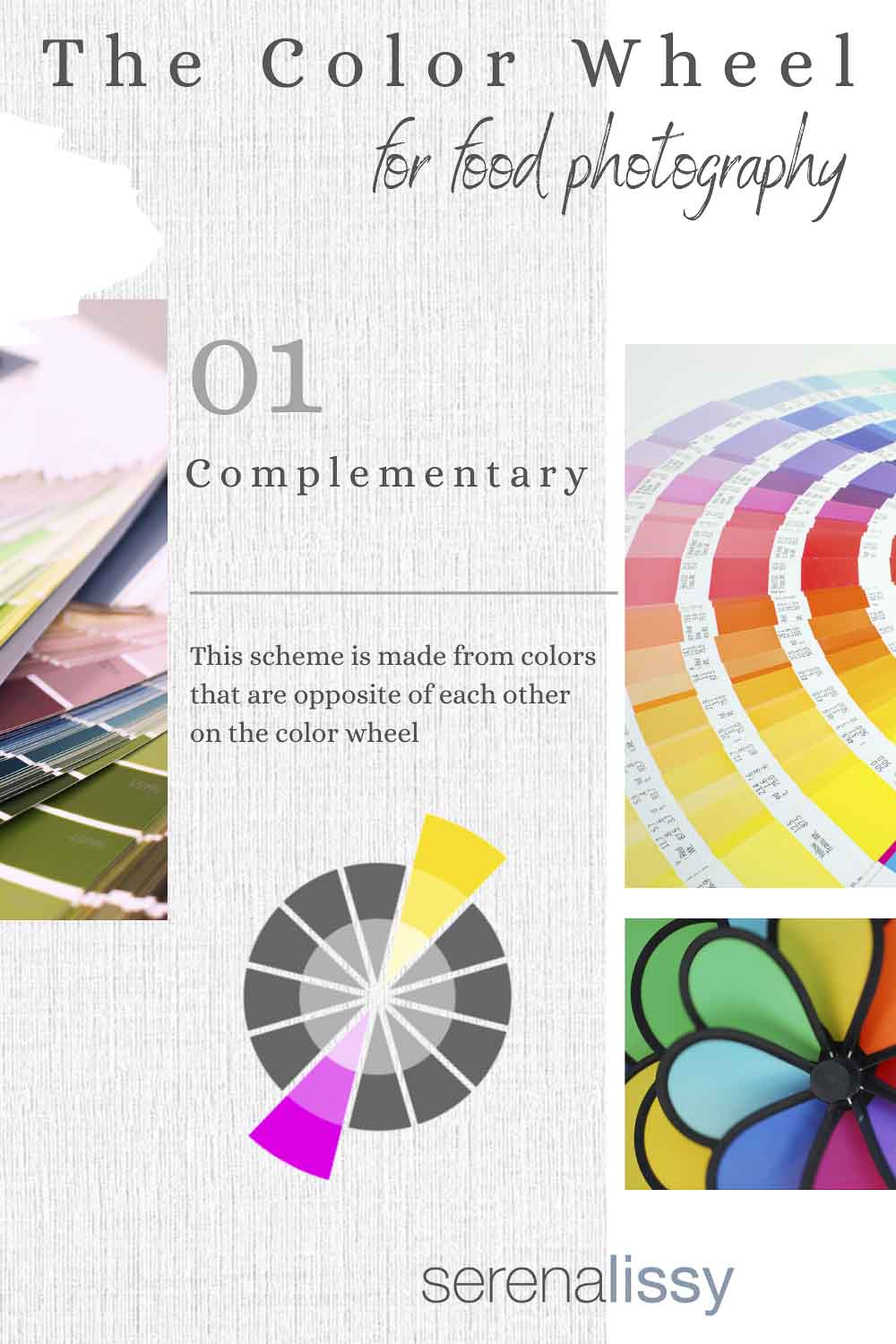
    Complementary color pairings consist of colors located on opposite sides of the color wheel, allowing for really bold color contrasts that work well with any photograph. Some popular choices for complementary color choices include red and green, as well as orange and blue. For instance, if I was photographing red peppers, I might want to use a green background for design elements in the food photo.

    When it comes to food photography, you can create complementary compositions with food items alone or as a combination of food and props.

    Baking a delicious golden-orange crusted pie? Try using a blue-patterned napkin as a backdrop or a pie tin or plate with blue tones.

    Creating a deliciously crunchy Asian-sesame salad? Throw in some yellow/orange croutons or wonton strips. While these won’t give you the striking complementary colors of green and red, the contrast will pair beautifully enough for an engaging photo.

    Our Dulce de Leche Cookie recipe results in beautifully cream-colored cookies with powdered sugar on top. Yet our photos of this cookie also highlight red berries and green fir tree pieces to highlight the winter holiday season with complementary colors. 

    The great thing about complementary colors is they highlight each other, so this technique looks best with some great light sources on your subject (natural or artificial).

    Analogous Example of Color Wheel

    Analogous Colors

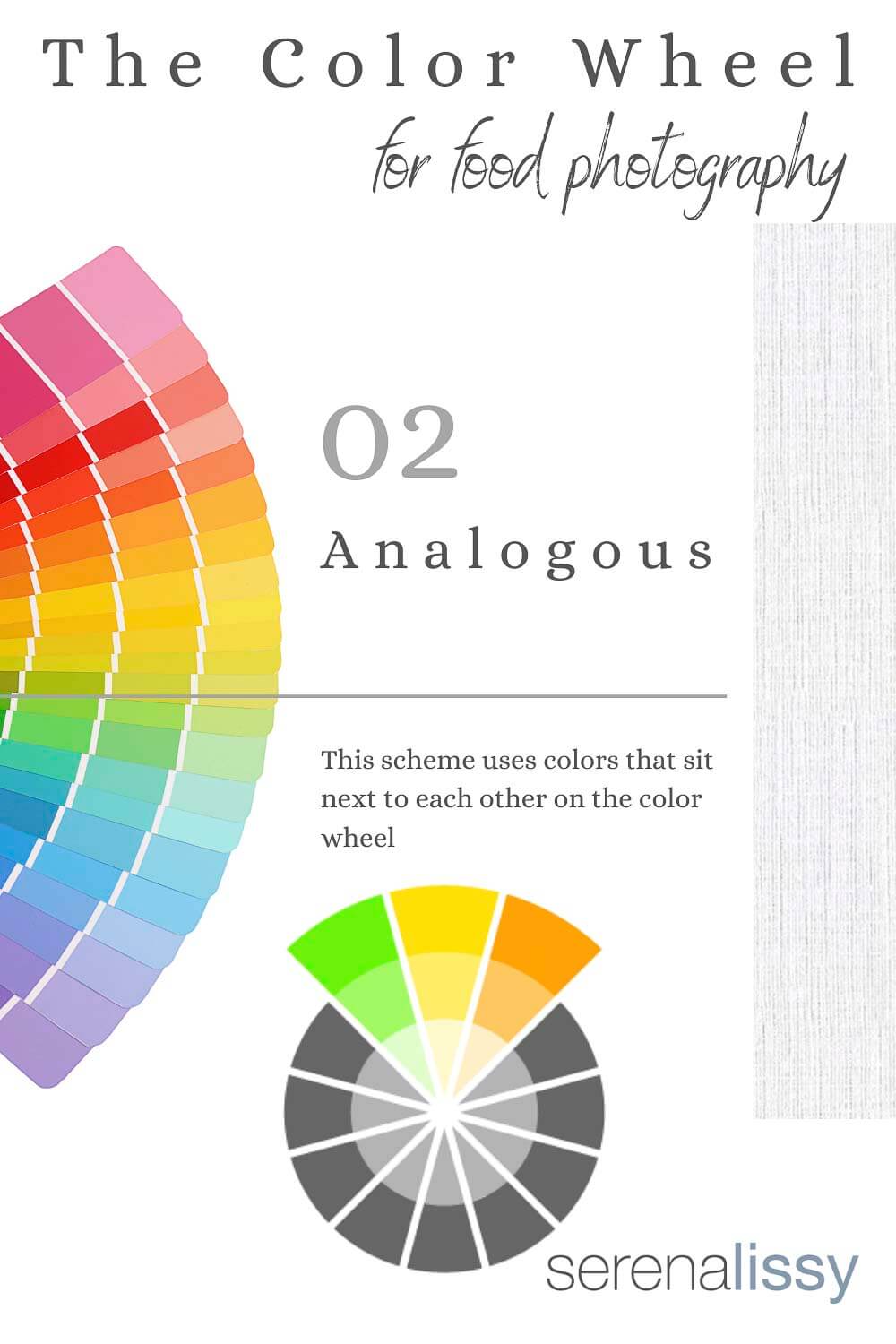
    Analogous colors are colors that are next to each other on the color wheel. Think of a sunset or a gradient. For example, orange, red-orange, and red are all analogous to each other.

    Rainbow-colored or themed macaron cookies are often prepared and packaged in analogous colors for a beautiful gradient effect.

    Our Manchego Cheesecake recipe results in a perfect piece of sweet cheesecake. It’s also reliant on graham cracker crumbs for extra texture. The yellow cheesecake paired with orange/brown crumbs and a pink blackberry puree results in a beautiful array of analogous colors.

    A feast for both your eyes and your soul!

    Monochromatic Colors

    Monochromatic colors consist of tints and shades of the same color. So, a pack of macarons containing pastel blue, sky blue, and dark blue cookies would be highlighting monochromatic colors.

    Here at SerenaLissy.com, we have an absolutely delicious recipe for Mascarpone Cream Macarons with Berries. The recipe calls for red food coloring, fresh berries, and berry puree gel. These result in different shades of pink and red and orange for a beautiful composition of monochromatic colors. I love to play with the basics of color theory to get better food photography.

    Use of Color Theory in Food Photography

    Have we convinced you to grab a color wheel to hang in your kitchen yet? Simply turning to a color wheel for some extra assistance when lining up a shot is a great way to ensure that every eye will appreciate your treat.

    In addition to choosing color pairings, there are a few tried and true ways to double-check your color choices in baking. First, ensure that you know what the main color of your main subject and photo will be. Next, have a general idea of the food story you are trying to tell. Then, determine the intended feeling or different moods you wish to create with your food and photo.

    If you’re creating a refreshing acai bowl or drink, cooler colors may be the way to relax the viewer subconsciously. These might include blues, greens, and purples. If you’re looking for something warm and inviting, warm colors can simulate a feeling of a friendly campfire or beach. Use colors like red, orange, and yellow.

    Finally, once you’ve identified your must-have colors and mood of the shoot, identify how you can fill in any gaps in the photo with props. For example, use a plain white or black background for food items that are already colorful and complex. Remember, the goal is to create a beautiful image with visual interest and capture your viewer's attention.

    Don’t be afraid to throw in analogous or completely busy pattern fabrics as props if your food item lacks color. And if you happen to have a large baking weekend or session, remember that other baked goods can be props in photos, too! So put on your food stylist's hat and show off all of your hard work using these simple tips.

    Food Photography Example of Color Wheel

    Ready To Learn More?

    Food photography is an art form that takes time to be perfected. It’s not as easy as clicking a button and taking a photo. You need to know how colors work together for different types of food and what kind of lighting will make your subject stand out against its background. The color wheel can help you understand which colors go well with one another. And also when they should be used in your project- like when photographing certain foods or doing graphic design on a website. If this sounds intimidating, don’t worry! We have some great articles about food photography tips here at our blog so check them out for more information (and practice!).

    Ready to learn more about food photography at home? Read our article on 15 Food Photography Props You Probably Have at Home for some tried-and-true easy ways to start taking photos.

    The Five Day Food Photography Challenge

    Want to take your food photography up a notch?

    I’ve been photographing food for years and have learned some tricks of the trade. Join me on this 5-day challenge where you’ll learn how to master the art of food photography, one bite at a time. You’ll be amazed by what you can do with just a few simple tips. You will learn how to make your photos pop with color, texture, and lighting. Sign up today!

    Looking For More Recipes?

    Subscribe to my free newsletter to get new baking tips in your inbox monthly. Find me sharing new recipes and tips on Pinterest, Instagram, or Facebook.

    As an Amazon Associate and member of other affiliate programs, I earn from qualifying purchases. What that means is if you click on one of our affiliate links, they may toss a few pennies our way for a commission.
    Instant Pot Frozen Greek Yogurt

    July 12, 2021

    Frozen Greek Yogurt from your Instant Pot

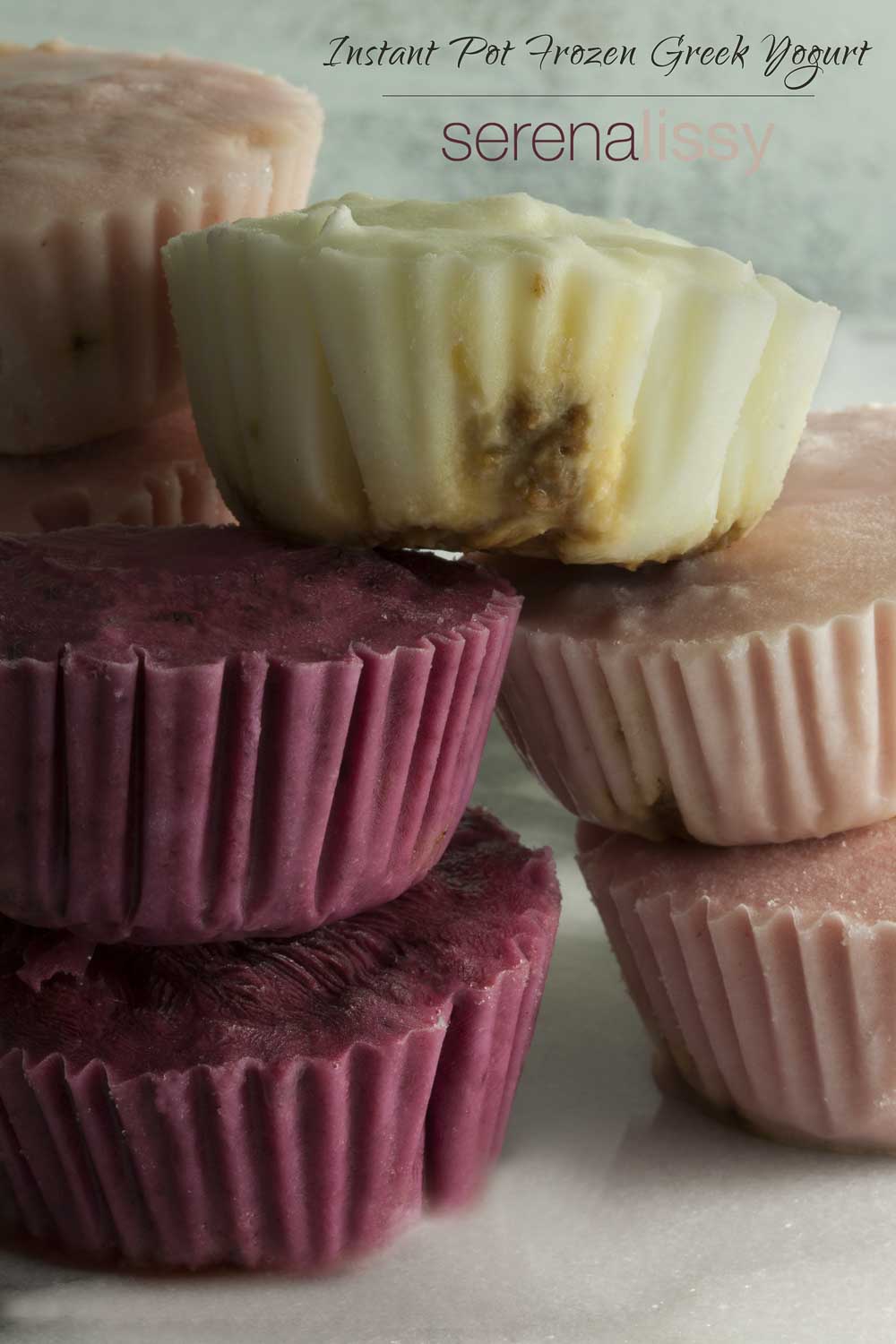
    Instant Pot Frozen Greek Yogurt is a cool and creamy treat perfect for hot summer days or any time you crave a healthy treat, and it's easy to make greek yogurt in your instant pot.

    Frozen Greek Yogurt from your Instant Pot @serenalissy

    Homemade Greek Yogurt is a Healthy Swap

    The new year is here, and it's that month of resolutions and goal setting and deciding all the changes we are going to have in our lives in 2018 and how much better everything is going to be. For me, it's that month that I try to make some healthier eating choices that I know I can stick with all year long. No fad diets, no crazy food restrictions – none of that works for me. Instead, I try to incorporate a few more healthy eating choices (like eating more Greek yogurt) that I love, and I know I will stick with. I plan a few half marathons that I want to run for the year and maybe a few distance bike rides, but nothing extreme that I know I will give up in February.

    I've been eating yogurt all my life. I've seen a few recipes out there for the Instant Pot, so I figured I'd give it a try.

    At first, I didn't see the logic. By the time I buy my starter and my gallon of milk, why didn't I just buy a container of Chobani at the grocery store?

    It Pays To Make Your Own Yogurt

    I probably go through one container every two weeks. I'm the only yogurt eater in the house. It's not that expensive of a food habit for me. But then, after reading quite a bit on it, I saw people were going through containers (yes, more than one) in a week. And if it's a family of yogurt lovers, then multiple containers per week. Ok, cha-ching. I got it. Plus, it's also another great use of the Instant Pot, and finding appliances that have multiple duties is always a plus.

    Then, I started looking at the recipes. They were almost all the same. A half-gallon of whole milk, two tablespoons of yogurt starter. Not much change, no matter where the recipe came from. I did five tests this week with different milk brands and different yogurt brand starters. What I didn't want to do was post a recipe that was impossible for people to find the ingredients. The extra fat kinds of milk, the hard-to-find Greek yogurts that make the best starters. What I wanted was a simple yogurt that anyone with an Instant Pot could make and love.

    There Are Five Steps To Making Greek Yogurt

    1. Heat milk
    2. Cool milk
    3. Add yogurt starter to milk
    4. Incubation period for the yogurt and then wait for yogurt to set
    5. Strain liquid whey from plain yogurt to get Greek-style yogurt

    Every yogurt recipe I made turned out. I've seen a few disasters on other online blog comments about the yogurt not turning out for whatever reason. Now some yogurts were thicker than others, and some had a more tangy taste than others. I cooked all recipes for 10 hours for the incubation time. No change on that. I was surprised by the tanginess of the flavors and how different each starter was.

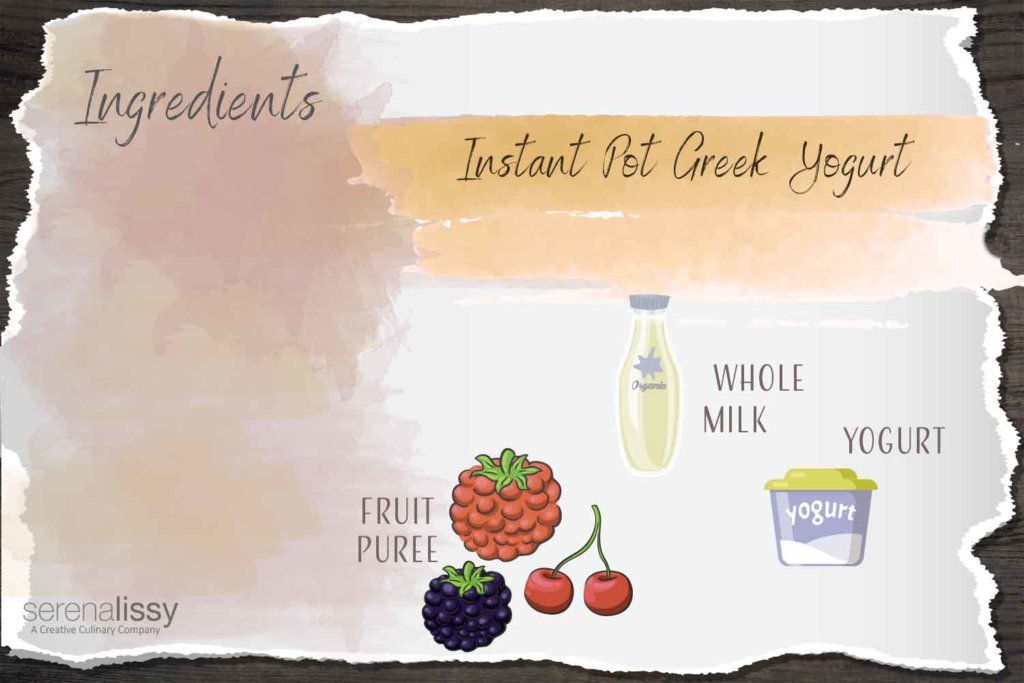
    Instant Pot Greek Yogurt Ingredients

    Ingredients in Greek Yogurt

    • Milk – For me, I found the best kind of milk to work with was the Horizon Organic Whole Milk brand, whole milk.
    • Yogurt – I favored the tangy taste that I got from the Chobani whole milk Greek yogurt. We tried Fage, Dannon, and Chobani starters. Whichever one you decide to use MUST HAVE active live yogurt cultures in the ingredient list. Those little cultures are your starter, and without them, you will not be making yogurt.
    • Fruit - Pureed fruit can add lots of flavor to greek yogurt. Use your favorite fresh berries or a blend of fresh fruit.
    • Granola - This optional topping has a nice crunch!

    Supplies For The Greek Yogurt

    • Instant Pot / Pressure Cooker with yogurt button function
    • Instant Read Thermometer to ensure your milk is at the right temperature during the heat up and cool down processes.
    • Cheesecloth

    Pro Tip: How to Strain Greek Yogurt

    Now when you finish making the recipe, you will have yogurt. From all the reading, what makes it Greek Yogurt is the straining of the whey out of the yogurt. Both ways were good for me, but I preferred to strain to get a thicker yogurt. It just felt creamier, and in my mind, had a richer taste.  Any yogurt experts out there? Anything else to add as to the difference between yogurt and Greek yogurt? Please share if so!

    For the straining, I used cheesecloth. I folded it and lined a strainer, letting the whey drip out. I did this for about 4 hours. You could also use coffee filters. Cheaper than cheesecloth and will do the same job. The Euro Cuisine GY50 Greek Yogurt Strainer is a bit fancy and will definitely do the job. But if you have a simple strainer basket, it works fine. There are all kinds of special yogurt strainers out there, but I already had this, and it worked fine.

    How Long does The Yogurt Last?

    For best results, store in an airtight container in the refrigerator for up to two weeks. Be sure to save some to make your next batch, so you don't have to buy another container for the starter yogurt. Use immediately if you are making another batch right after this one, or you can put the yogurt into ice cube trays and freeze it for future use. Thaw completely when ready to use next time for another batch.

    Make Frozen Greek Yogurt

    Once I had the yogurt I loved, then what else could I do with it? I love fruit in my yogurt, so I whipped up some fruit purees (whole fruit mixed in a food processor until liquid) and started adding. I'm now experimenting with some no-bake cakes and a few other things.

    I decided a great way to use some of my yogurt to make these yogurt pops. And here is the thing, remember, they are frozen. You don't take an ice cube out of the freezer and bite it in half, do you? Take these out of the freezer and let them soften a few minutes before trying to eat. The key is to keep them thin and not make huge pops. The image you see of the pops is a half-filled baking cup. These are on the verge of too thick.

    I also learned that the Wilton Silicone Baking Cups are so much better to work with than paper cupcake liners. The paper liners were hard to get off the frozen pop. Once they thawed enough to remove all the paper, then I could just put them in a bowl and eat with a spoon. I made granola for my yogurt pops, but any granola you love will work for this recipe.

    Dual image of Yogurt in Silicone Cups

    Cook Timing Is Important

    For the timing of the cook, you saw the part where I cooked it for 10 hours, right? And there is some prep before that to heat and cool the milk, so add on another hour. Either plan to make this first thing in the morning when you get up or last thing at night before you go to bed. Poor timing will have you awake in the middle of the night dealing with your yogurt.

    I hope you give this a try. It's simple and so good for you. Please share any delicious yogurt creations you end up making.

    Now, if you find that you aren't ready to go with yogurt, we have a few other Instant Pot recipes that everyone seems to love. The Triple Chocolate Cheesecake is my favorite, followed by the Peppermint Bark Cheesecake.

    More Frozen Treats

    • Mocha Ice Cream Sandwich
    • Chocolate Chunk Ice Cream

    Looking For More Recipes?

    Subscribe to my free newsletter to get new baking tips in your inbox monthly. Find me sharing new recipes and tips on Pinterest, Instagram, or Facebook.

    Frozen Greek Yogurt made with your Instant Pot

    Instant Pot Greek Yogurt

    Whip up a batch of creamy Greek yogurt in your instant pot and freeze it for a refreshing treat.
    5 from 2 votes
    Print Pin Rate
    Course: Breakfast, Snack
    Cuisine: American
    Prep Time: 5 minutes minutes
    Cook Time: 9 hours hours
    Total Time: 9 hours hours 5 minutes minutes
    Servings: 16 Servings
    Calories: 81kcal
    Author: Serena

    Ingredients

    • 2 liters (½ gallon Horizon Organic whole milk)
    • 35 grams Chobani Whole Milk Plain Greek Yogurt
    • 3 ounces fruit puree Blackberry, Cherry, Strawberry. Whatever is your favorite
    • Granola

    Instructions

    Greek Yogurt

    • Put milk in Instant Pot and use the Yogurt More Function to boil the milk to at least 182°F. The instant pot will show "boil" on the screen. It takes close to 30 minutes for this.
    • Once the boiling is done, the Instant Pot changes to "yogt". Lift the lid, do not let the water drip back into the pot.
    • Gently stir with a silicone spatula; do not scrape the bottom of the pot. Test the temperature in a few spots to make sure you have achieved at least 182°F (If the milk has not reached temperature, put lid back on and heat the milk with the slow cook less function for 15 minutes)
    • Put 35 grams of yogurt into a 2 cup measuring cup and set aside.
    • Take the pot out of the Instant Pot and set it aside to let it cool to 111°F.
    • Once cooled, skim the milk skin off of the milk.
    • Add ½ cup of the cooled milk to the yogurt in the measuring cup. Stir to dissolve. Once dissolved, pour the mixture back into the inner pot and gently stir. Again, do not scrape the bottom.
    • Put the inner pot back into the Instant Pot and close the lid.
    • Press the yogurt function button and use the Yogurt Normal Function. Adjust the time to 10:00. This is the time that I used, if you like really tangy yogurt, you can go up to 12:00 hours. If you want less tangy, you could reduce it to 8:00 hours.
    • The timer will start to count up once it turns on.
    • Once the yogurt has completed the incubation time, remove the inner pot and place it in the fridge for a few hours covered with plastic wrap. The yogurt will also thicken some.
    • You can eat the yogurt at this stage. Or, if you want Greek Yogurt, you will need to strain out the whey. I strained for 4 hours. Once the yogurt is strained, discard the liquid and transfer the yogurt to a bowl. At this time, you should have thick greek yogurt. If it's a bit lumpy, you can use your hand mixer to get the creamy texture you are wanting.
    • Once strained, I used 8 ounces of the yogurt with 3 ounces of puree. Mix them together, then pour the mixture into silicone cups with a bit of your favorite granola sprinkled in at the bottom. Put in the freezer for a few hours and enjoy. You could also add vanilla and honey to your liking with the fruit puree.

    Notes

    Recipe Source: SerenaLissy.com
    This website provides approximate nutrition information for convenience and as a courtesy only. Nutrition data is gathered primarily from the USDA Food Composition Database via Spoonacular API, whenever available, or otherwise other online calculators. While this information can be helpful in estimating the nutritional information of a recipe, it is by no means accurate or official and is not evaluated by the Food and Drug Administration.
     
    All images and content are copyright protected. Do not use our images without prior permission.

    Nutrition

    Serving: 1Serving | Calories: 81kcal | Carbohydrates: 7g | Protein: 4g | Fat: 4g | Saturated Fat: 2g | Polyunsaturated Fat: 1g | Monounsaturated Fat: 1g | Cholesterol: 13mg | Sodium: 55mg | Potassium: 177mg | Fiber: 1g | Sugar: 7g | Vitamin A: 260IU | Vitamin C: 2mg | Calcium: 144mg | Iron: 1mg
    Tried this Recipe? Pin it Today!Mention @SerenaLissy or tag #serenalissy!

    Disclaimer: this post contains affiliate links, which means that if you purchase an item after clicking on the link, I will receive a small commission from the sale. This is at no extra cost to you, and as always, all opinions and recommendations are my own.

    Homemade Frozen Greek Yogurt Pops with your Instant Pot @serenalissy
    Homemade Frozen Greek Yogurt Pops with your Instant Pot

    Homemade Frozen Greek Yogurt Pops with your Instant Pot @serenalissy
    Homemade Frozen Greek Yogurt Pops with your Instant Pot

    Homemade Frozen Greek Yogurt Pops with your Instant Pot @serenalissy
    Homemade Frozen Greek Yogurt Pops with your Instant Pot

    The Function of Sugar In Baking

    June 30, 2021

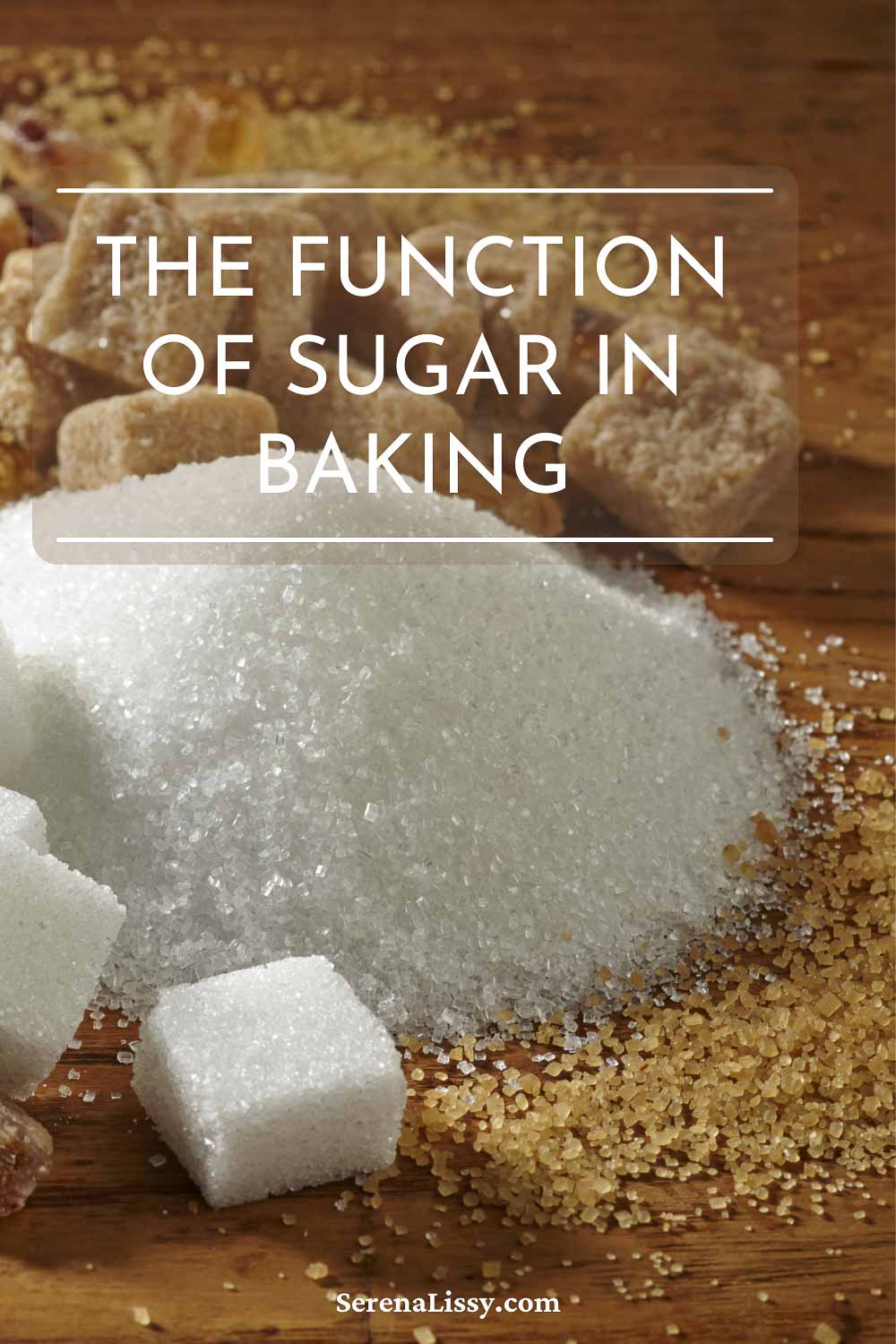
    Brown and White sugar on table

    Few things can make someone happy as quickly as sugar. A sweet treat is often an amazing reward for a life accomplishment, a hard day, or a small gift to a friend. In fact, sugar is the most popular ingredient added to foods in the entire United States! Clearly we just can't get enough of that sweet flavor.

    These days, the average American eats almost 152 pounds of sugar each year, compared to 123 pounds of sugar per year in 1970. This is definitely more than our recommended amount of sugar each year according to nutritionists.

    So why do we love sugar so much, and what is the function of sugar in baking? How essential is it to the baking process and to the foods we love so much? Today, we’re exploring the uses of sugar and some of its essential functions.

    Brown and White sugar on table

    Sugar and Sweetness

    As sweet as sugar! The forefront of sugar in baking is, of course, its added sweetness to any bake. This flavor is often associated with comfort, happiness, joy, and a release of dopamine in the brain.

    Granulated sugar, also known as white sugar or table sugar, is the most commonly used sugar in bakes, offering a simple yet effective added sweetness level. Light brown sugar or dark brown sugar is also prevalent and plays an important role in baking, giving your dish more deep, caramel, and delicious, complex flavors.

    There are so many different types of sugars used in food applications that give us the sweet delicious flavors; cane sugar, corn syrup, maple syrup, invert sugar, caster sugar, confectioners' sugar, etc. It seems the list grows longer each year, and there is no doubt the role that sugar plays as an important ingredient in our sweetness obsession.

    Sugar as a Leavening Agent

    It’s no big surprise to many bakers that yeast is responsible for various bakes for the rise and fluff of delicious bites. Think of your favorite bread dough that you love to make. Sugar makes the yeast more effective and can start the gluten development process, acting as the yeast’s food and nourishment.

    The yeast molecules can break down the sugar and release carbon dioxide gas more quickly, creating bubbles and dough rises.

    Outside of bakes involving yeast, sugar still aids in rises when creamed with butter and even as a standalone ingredient. Many cookies start with the creaming process, basically, the creaming of sugar and butter together, which traps air between the two ingredients and helps lighten and leaven the mix.

    Alone, sugar also tends to hold onto water, resulting in gas expansion once in the oven. I’m sure you’ve made a cookie batch or 100 that included sugar, yet no baking soda or baking powder. In those cases, sugar is the culprit behind not just the small cookie rises but the cookie’s overall shape, too. Sugar is also responsible for the cracking of cookies during baking. Think gingersnaps or your favorite crinkle cookies.

    Sugar and Golden-Brown Bake Colors

    Did you know that that golden-brown color you’re looking for as a signifier that your quick breads are done appears because of sugar? During the cooking process, the sugar caramelizes starting at 347℉, giving off that beautiful slightly browned color.

    This also has to do with the phenomenon known as the Maillard Reaction. The French scientist Louis Maillard first described this reaction in 1912 and entails what happens when amino acids and sugars are heated and browned.

    Humans are the only creatures who cook their food, and the reason why this reaction results in mouth-watering can be traced back to hunting assumptions. Browned and cooked food would suggest that the food is harmless (dead) and contains nutritional content (amino acids and sugars).

    I know, I know- you don’t have to think this deeply when you’re simply looking forward to a great snack or meal! But hey, we’re a big proponent of baked goods as delicious treats here. Yum!

    White granulated sugar in a spoon

    Sugar as a Preservative

    I’m sure you’ve noticed that cereals, jams, and even store-bought cookie dough seem to have a longer shelf life compared to fresh eggs or milk. Sugar is a natural preservative, and in many items with long shelf lives, sugar has been added outside of natural occurrences.

    Particularly in jams and preserves, sugar also helps create that bouncy yet firm texture known as a gel-forming process. Gelation as a process occurs when pectin, a component in fruits, combines with sugar and acid.

    Once opened, jars of jams and preserves are exposed to air. Sugar helps combat spoiling of the jar’s contents by holding and attracting water molecules instead, denying water to microorganisms that could spoil your food. It's pretty fascinating to think how the food industry has used sugar science to extend shelf life.

    Sugar and Baked Good Structure

    The other week, we explored different types of flour and how different amounts of protein can affect gluten formation. Too much gluten and your bake may become too tough and dense. Too little, and you’ll have some sad, drooping dough.

    Sugar acts as a counterbalance to gluten-forming proteins. As an ingredient that bonds with water, sugar pulls moisture away from other starches and proteins. This lessens gluten formation and helps maintain some softness to a bake.

    Without sugar, you might create an unfortunately tough bake without enough sweetness to be delicious. No thanks!

    Sugar vs. Artificial & Alternative Sweeteners in Bakes

    Sugar is essential for a deliciously sweet bake and even helps in leavening, color, preservatives, and structure. So how does it rank against artificial sweeteners or sugar substitutes? Some extremely popular alternatives to sugarcane sugar include aspartame, the sweet herb stevia, and fruit juice concentrates.

    Overall, artificial and alternative sweeteners in baking can definitely offset some calorie count concerns. However, alternatives often lack the browning and moisture-retaining properties of granulated sugar.

    If you’re looking to try an alternative in baking, make sure to do your research into your chosen product for safety and proper replacement measurements.

    Molecular Structure of Sugar

    The Function of Sugar in Baking and Life

    No one has to be a scientist to bake delicious baked goods. But it can be so fun to take a look into the science behind our favorite ingredients, as recipes are, after all, based on science, trial & error!

    When it comes to sugar in baking, sugar is more than a simple sweetening ingredient. It has a vital part to play in preserving foods, lending texture, tenderness, and even that to-die-for smell that makes your mouth water.

    Whether or not your sugar intake is something to be concerned about is a personal choice; however, added sugars to processed food products are arguably more of a problem than at-home bakes that you have control over in terms of creation and quantity.

    There’s no harm in indulging healthily, and there is beauty to be made and eaten in baked goods. Ready to up your baking game and try a few scrumptious recipes? Try our delicious Apple Cinnamon Muffin recipe or Chocolate Donut Bread Pudding. We also have a plethora of additional recipes to choose from right here on SerenaLissy.com.

    Looking for More Baking Tips?

    Subscribe to my free newsletter to get new baking tips in your inbox monthly. Find me sharing new recipes and tips on Pinterest, Instagram, or Facebook.

    As an Amazon Associate and member of other affiliate programs, I earn from qualifying purchases. What that means is if you click on one of our affiliate links, they may toss a few pennies our way for a commission.
    Easy Chocolate Crepes

    June 28, 2021

    Chocolate Crepes on Plate

    The new year is finally here. We have been on a holiday break for the last week and loving every minute of spending time with family and friends and enjoying a much needed break from the chocolate business. Before I know it, Valentine's day will be here, and we will be back to the craziness of the chocolate world. To enjoy my last few days, I whipped up this recipe for Easy Chocolate Crepes.

    Chocolate Crepes

    Chocolate Crepes

    I was in Dallas last week for a day and stopped by a crepe restaurant for breakfast before meeting a client. I rarely get crepes, but I decided to make homemade crepes this week. Crepes are so simple; I don't know why I never make them. It's kind of like the general contractor whose house is always in need of a repair. I'm the chocolatier that never has time to make chocolate things while at home. So I created this recipe for easy chocolate crepes to create delicious, light, and decadent chocolate crepes. It's an easy crepe recipe made from simple ingredients you probably have in your pantry. A great recipe for breakfast or a sweet dessert!

    Ingredients

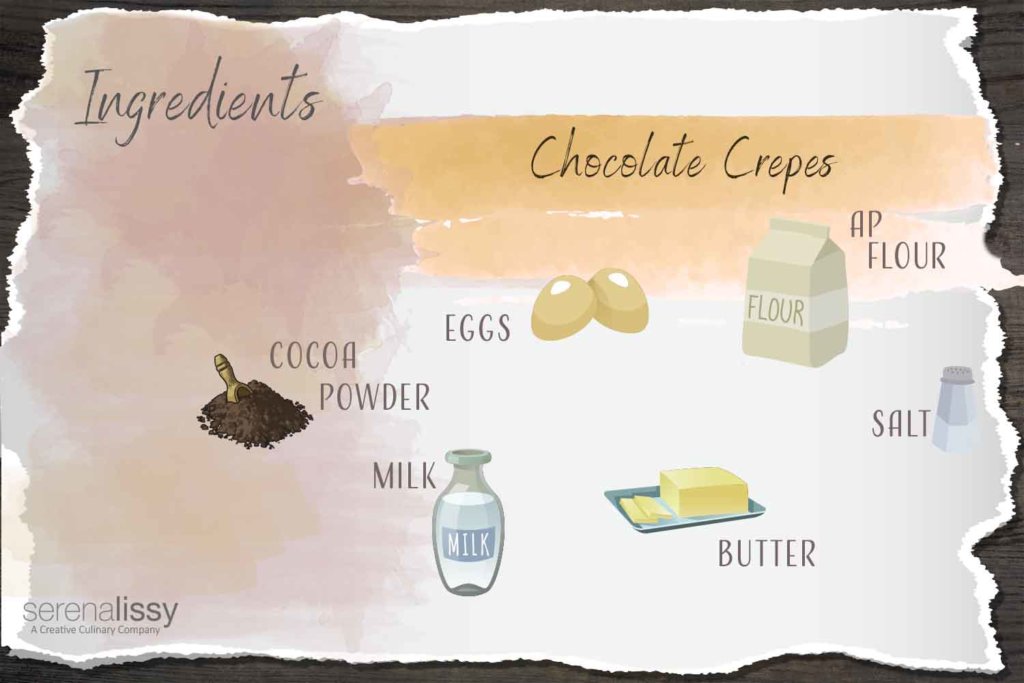
    Chocolate  Crepes Ingredients
    • All Purpose Flour
    • Cocoa Powder
    • Milk
    • Eggs
    • Butter
    • Salt

    Crepe Filling Ideas

    You can fill the crepes with basically anything you would want. One of my favorite ways to have crepes is to fill them with fresh fruit. You could even go with something as simple as peanut butter and jelly or jam and powdered sugar if you didn't want to cook anything else other than the crepe. A chocolate spread or fudge sauce would be great, or dare I say Nutella or even cookie butter! Yum!

    How to Make Chocolate Crepes

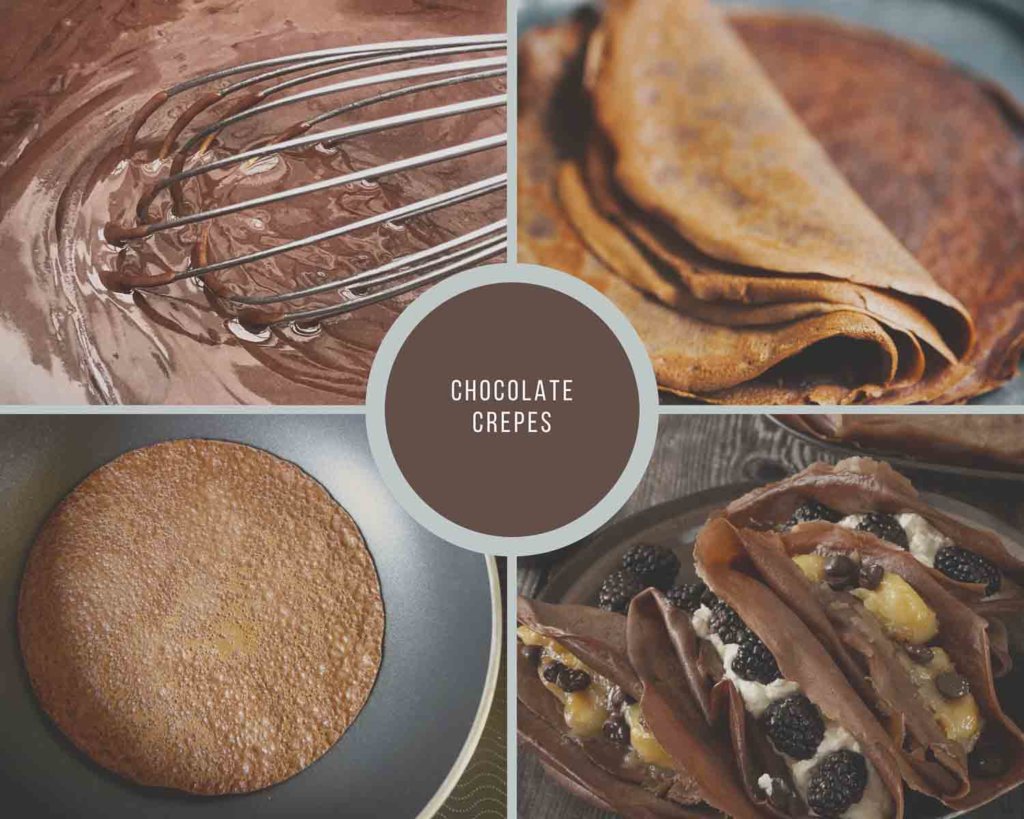
    Chocolate Crepes Process Collage

    In a medium-sized mixing bowl, mix all ingredients (flour, cocoa powder, milk, water, eggs, salt) with a whisk until smooth. You could also use an electric mixer for this. Let the crepe batter chill in the refrigerator for 30 minutes. Heat a non-stick frying pan over medium heat and brush with melted butter. You could also spray the pan with kitchen spray. Pour 2 to 3 tablespoons of batter about the size of a small ladleful of batter into the center of the pan and tilt the pan in all directions to cover the bottom evenly. Cook for about 1 minute or until browned on the bottom.

    Tips For Chocolate Crepes

    • A nice smooth batter is what you are looking for. This results in thin, delicious crepes. It's easy to swirl around in a crepe pan or frying pan.
    • Make sure your pan is nice and hot. The crepes will cook quickly. About 1 minute on the first side, and maybe 30 seconds on the other side.
    • Don't add too much batter to the pan. 2-3 tablespoons of batter are all you need to cover the entire bottom of the pan. Tilt the pan and swirl the batter around.
    • If this is your first time making crepes plan on your first one or two to be your learning crepes. They probably won't be right, but they will still taste fabulous. It takes a couple of tries to get the techniques down.
    • A crepe spatula, also known as a crepe spreader, is a great tool to have. If you find you love making crepes, I'd definitely make the investment.
    • I used a 10" nonstick frying pan to make the crepes. But a luxury item to have would be a crepe pan. There are many out there with a wide range of prices. If you find yourself making crepes weekly for a weekend family breakfast treat, I'd say go for an upgrade and grab a crepe pan.

    Crepe FAQ

    What is a crepe?

    A crepe is a pancake that has been thinned out. It's stuffed or folded with toppings that could be either savory or sweet. It's a decadent breakfast or even a special occasion dessert.

    How thick should a crepe be?

    The batter should be the thickness of heavy whipping cream, almost liquid. The base of your nonstick skillet should be covered in batter, but not thin enough to see through it.

    Should crepe batter be cold?

    Yes, refrigerate your batter for at least 30 minutes so it isn't room temperature. It allows the flour to absorb the liquid and will result in more tender crepes.

    Does crepe batter go bad?

    You can store your unused crepe batter in the refrigerator for a couple of days. You can also refrigerate or freeze your leftover cooked crepes. Let them cool flat and then lay flat in a plastic storage bag.

    Why are the crepes crispy?

    Your pan was probably too hot. You want your batter to form a thin layer on the pan and not to set immediately once it hits the pan.

    Why are the crepes rubbery?

    There are two possibilities for this. Too much flour is the first, so make sure you measure your flour properly. Use a scale. The second is it cooked too slowly in the pan. Cook for only one minute on side one, and about 30 seconds for the second side. If you find they are not done with this time limit, turn your heat up a bit to get the pan hotter.

    These crepes are not only delicious and easy to make, but they also look beautiful. They can be made ahead of time and frozen for a quick breakfast or dessert on busy weekdays. I hope you and your whole family enjoy these easy chocolate crepes as much as I did. I wish you a happy new year and a year of fabulous food!

    Looking For More Recipes?

    Subscribe to my free newsletter to get new baking tips in your inbox monthly. Find me sharing new recipes and tips on Pinterest, Instagram, or Facebook.

    Chocolate Crepes with Berries on Plate

    Chocolate Crepes

    An easy homemade chocolate crepe recipe for delicious, light and decadent chocolate crepes. .
    5 from 10 votes
    Print Pin Rate
    Course: Breakfast, Dessert
    Cuisine: American
    Prep Time: 40 minutes minutes
    Cook Time: 15 minutes minutes
    Total Time: 55 minutes minutes
    Servings: 12 Crepes
    Calories: 115kcal
    Author: Serena

    Ingredients

    • 172 Grams All Purpose Flour
    • 24 Grams Cocoa Powder
    • 1 Cup Cold Milk
    • 1 Cup Cold Water
    • 4 Large Eggs
    • ¼ Teaspoon Salt
    • 3 Tablespoons melted butter plus more for brushing on pan

    Instructions

    • Mix all ingredients (flour, cocoa powder, milk, water, eggs, salt) with a whisk in a medium sized bowl until smooth.
    • Chill crepe batter in the refrigerator for 30 minutes.
    • Heat a non-stick frying pan over medium heat. Brush with melted butter.
    • Pour in 2 to 3 tablespoons of batter into the center of the pan and then tilt the pan in all directions to cover the bottom evenly.
    • Cook about 1 minute, or until browned on the bottom.
    • Turn and cook briefly on the other side.
    • Cool on a rack as you finish making the rest.

    Notes

    Recipe Source: SerenaLissy.com
    This website provides approximate nutrition information for convenience and as a courtesy only. Nutrition data is gathered primarily from the USDA Food Composition Database via Spoonacular API, whenever available, or otherwise other online calculators. While this information can be helpful in estimating the nutritional information of a recipe, it is by no means accurate or official and is not evaluated by the Food and Drug Administration.
    All images and content are copyright protected. Do not use our images without prior permission.

    Nutrition

    Serving: 1Crepe | Calories: 115kcal | Carbohydrates: 13g | Protein: 4g | Fat: 5g | Saturated Fat: 3g | Polyunsaturated Fat: 1g | Monounsaturated Fat: 2g | Trans Fat: 1g | Cholesterol: 64mg | Sodium: 80mg | Potassium: 94mg | Fiber: 1g | Sugar: 1g | Vitamin A: 200IU | Calcium: 37mg | Iron: 1mg
    Tried this Recipe? Pin it Today!Mention @SerenaLissy or tag #serenalissy!

    Here are a few of our favorite chocolate breakfast recipes:

    • Chocolate Cranberry Scones
    • Easy Homemade Chocolate Poptarts
    • Double Chocolate Baked Donuts

    As an Amazon Associate and member of other affiliate programs, I earn from qualifying purchases. What that means is if you click on one of our affiliate links, they may toss a few pennies our way for a commission.
    Flour 101 - The Different Types of Flour and When to Use Them

    June 23, 2021

    Bowl of flour on table with rolling pin

    We’ve all been there. Standing in the flour aisle at the grocery store, trying to determine which flour would be best for our baked goods. The choices can feel overwhelming: cake flour or pastry flour? Whole wheat flour or bread flour? While some of us get truly invested in the science of baking and understand how different types of flours affect a recipe, many of us like to follow recipes quickly for delicious dishes and a chance at licking the spoon when no one is looking. That being said, there’s a lot to benefit from regarding food science and the basic knowledge of flour 101!

    Bags of flour on cabinet

    Today, we’re learning flour 101 and the different types of flour. We will also look at their benefits to make smarter decisions next time you are baking.

    While flour is often accepted as a base baking ingredient, the word “gluten” can sometimes get a bad reputation. And yet, gluten is the protein formed when wheat from flour and water mix, creating different types of dough essential for stretchy or soft bakes.

    Different types of flour are therefore often categorized by their different amounts of protein and use. Here are a few of the most common types of flour that can easily be found in numerous grocery stores!

    All-Purpose Flour

    You definitely have this one in your pantry! All-purpose flour is the go-to choice for many baked goods. If your recipe calls for flour without any special descriptors, this is the flour it’s referring to.

    This flour is typically 10-12 percent protein and is a great middle-of-the-road option for quick breads and crumbly cakes. It’s made from many different parts of wheat, including the germ, bran, and endosperm.

    However, white flour is labeled as all-purpose flour but is typically only made from the endosperm portion of wheat. The other portions of wheat are often sorted out at harvest or during the milling process. This gives it a longer shelf life but does remove some nutrients and flavor.

    Overall, all-purpose flour is a must-have for any baker. More specialty flours can give you different textures and richer tastes, but general AP flour is nothing to sneeze at!

    Whole Wheat

    Whole wheat flour is made from about 14% protein and contains all parts of the wheat seed, including the germ, bran, and endosperm. It’s darker in color compared to most all-purpose flour, which is often bleached.

    Whole wheat flour is also more flavorful than general all-purpose flour; however, it does create denser goods as it’s not as efficient in forming gluten. The next time you dig into a white loaf of bread alongside a loaf of whole wheat bread, take a look at the inside air pockets. You should be able to notice that the whole wheat loaf is denser and less fluffy. Neat!

    Wheat flour is also more absorbent than all-purpose flour, and recipes call for more liquid when using it. You can replace all-purpose white flour with wheat flour, although using slightly less wheat flour is recommended to preserve the structure.

    Bowl of flour on table with rolling pin

    Cake Flour

    Cake flour is almost as far away from whole wheat flour as you can get! With only 6-8 percent protein, this low protein content is ideal for a tender and moist cake. It is an extremely finely milled flour and is very weak at forming gluten. This allows the flour to absorb more liquid and gives you a higher rise. Think of your favorite tall layer cake, and it probably used cake flour. Angel food cakes and sponge cakes will also use cake flour.

    Biscuits, muffins, and scones can also be made with cake flour. The flour often goes through a bleaching process, or it's chlorinated, weakening its ability to form gluten even more and increases its ability to absorb liquid and sugar. Zero toughness, and only a sweet delicious baked good. Perfect!

    Pastry Flour

    Pastry flour can also be a good substitute for cake flour and clocks in at 8 to 9 percent protein. Like its protein percentage, pastry flour is often regarded as a middle step between all-purpose flour and cake flour.

    In general, pastry flour is what you’ll want to use to avoid heavy bakes and achieve more of an airy, fluffy texture. Pancakes, pie crust, and even biscuits can thrive with pastry flour.

    Mixing about 1 ⅓ cups of all-purpose flour with ⅔ cups of cake flour will give you a pastry flour-esque consistency, perfect for pie crusts, tarts, and cookies.

    Bread Flour

    Bread flour is 12-14 percent protein, and this higher protein content is what makes it an expert at creating gluten! Paired with yeasted doughs, bread flour is ideal for a chewier consistency and is perfect for artisan breads and bagels. It’s also used in cinnamon buns, pretzels, and dinner rolls.

    Bread flour will give you a workout, though, requiring a lot of kneading to help form its gluten structure. Without proper kneading, you can accidentally get flat bread that dips in the middle or never rise in the first place.

    The high protein in this flour is also helpful for a higher rise in baked goods alongside kneading. It creates an elastic gluten bond, giving you that satisfying chewier consistency in your bite.

    When in doubt or out of bread flour, you can substitute AP flour for it in the recipe. This will change the texture some, but your recipe should still work. 

    Three bowls of different flours on a table for comparison

    Self-Rising

    Self-rising flour is about 8.5% protein and is often produced in the southern United States. It’s more of a blend than a type of wheat production, including soft wheat flour, baking powder, and salt added in during the milling process.

    Self-rising flour is ideal for biscuits, muffins and more, and can be found specifically in mixes for biscuits. You can, of course, create your own self-rising effect with baking powder and other ingredients, but sometimes a mix is best for a quick fix!

    Choosing Types of Flour

    When it comes to the best choice for the right type of flour for your bake, it all comes down to following the status quo and testing boundaries. While all-purpose flour and pastry flour are the most used for cookies, who says that a cakey cake flour cookie wouldn’t be delicious?

    Some of us also love to sink our teeth into a good chunk of bread. Who said that a bit of bread flour in your brownies isn’t allowed? It may just give you that extra bite you crave.

    Here at SerenaLissy.com, we have a variety of recipes that are delicious from the get-go, but I’m always looking to iterate on them and learn from you in the comments, too. Check out our Cronut recipe for a delicious bread flour donut and croissant hybrid and our Caramel Apple Chocolate Mousse Cake recipe for a deliciously moist use of cake flour.

    No matter which recipe you start with, different flours and ratios can give you all sorts of delicious tastes and textures. The best way to learn this is to practice with a specific recipe and different brands and types to learn gluten development and get the best results in your final product. Enjoy!

    Looking For More Recipes And Baking Tips

    Subscribe to my free newsletter to get new baking tips in your inbox monthly. Find me sharing new recipes and tips on Pinterest, Instagram, or Facebook.

    As an Amazon Associate and member of other affiliate programs, I earn from qualifying purchases. What that means is if you click on one of our affiliate links, they may toss a few pennies our way for a commission.
    Simple And Easy Sugar Cookies

    June 21, 2021

    Sugar Cookies on Plate

    Sugar Cookies are great holiday cookies or any day cookies. These simple and easy sugar cookies hold their shape well and royal icing decorations makes them irresistible.

    Sugar Cookies with Royal Icing Decorations on Plate

    Sugar Cookies All Year Round

    We make these simple and easy sugar cookies all the time. They are one of my favorites since childhood. I know most people have these cookies in the fall, pretty much starting out with Halloween and going right on through Christmas for their favorite holiday cookies. I think they should be a year-round treat! August you could do back to school cookies with a fun design. If you thought about it, you could easily create a cookie theme for all 12 months. I know I could!

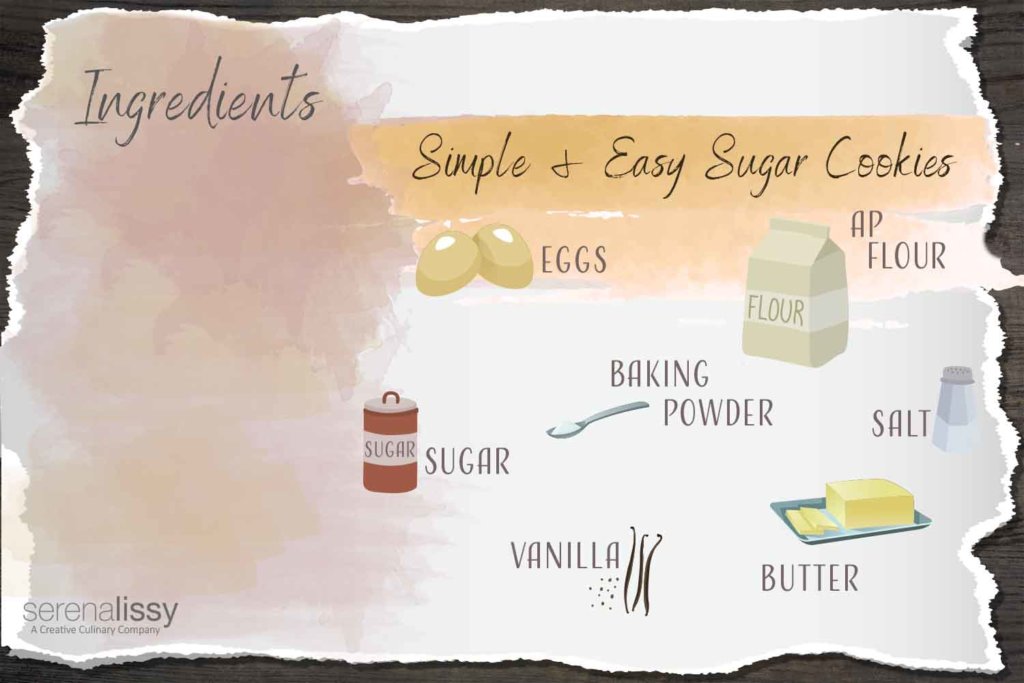
    Simple And Easy Sugar Cookie Ingredients

    Ingredients in Sugar Cookies

    The ingredients in these cookie may be basic but the flavor is sugary, buttery and nostalgic.

    • Sugar
    • Butter
    • Eggs
    • Vanilla
    • All-purpose flour
    • Baking powder
    • Salt
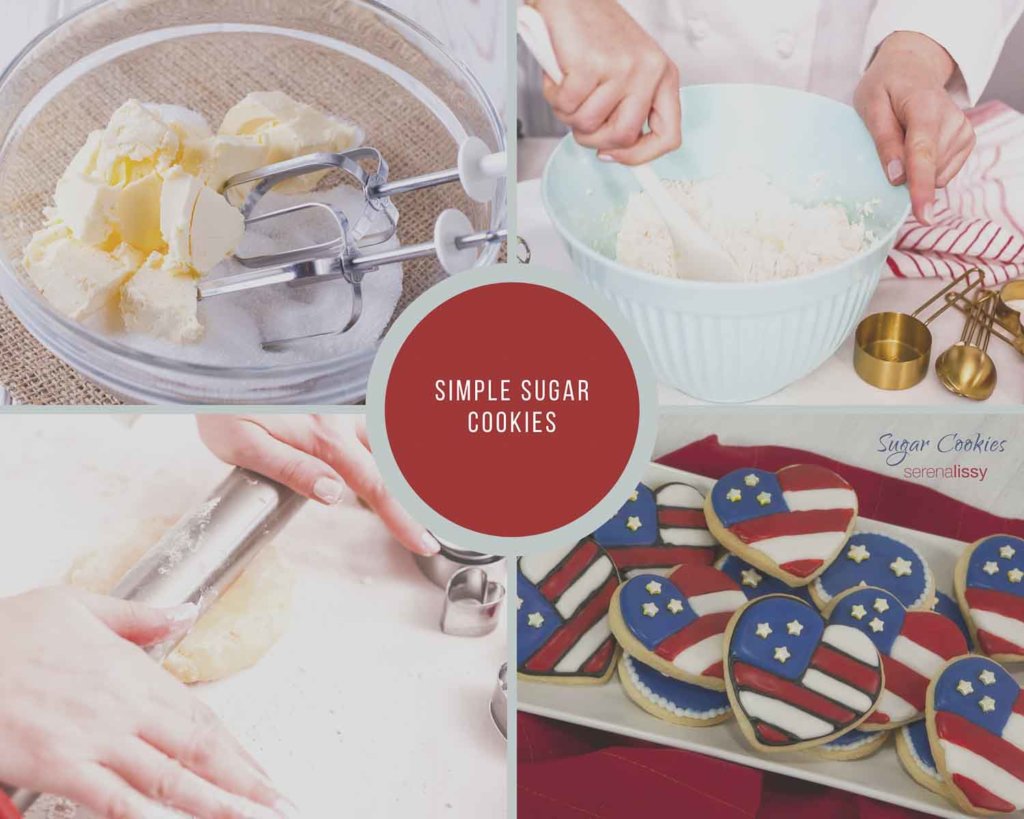
    Simple Sugar Cookies Process Collage

    How to Make Sugar Cookies

    Now for these sugar cookies I recommend you use a stand mixer for this. It helps to get the ingredients mixed in evenly. I also watch the mixer pretty close so I don't over mix. I like using a cutter for these so I can keep all the sizes the same. We do refrigerate the dough. I think it yields a better product. There could definitely be debates about this for hours from everyone out there.

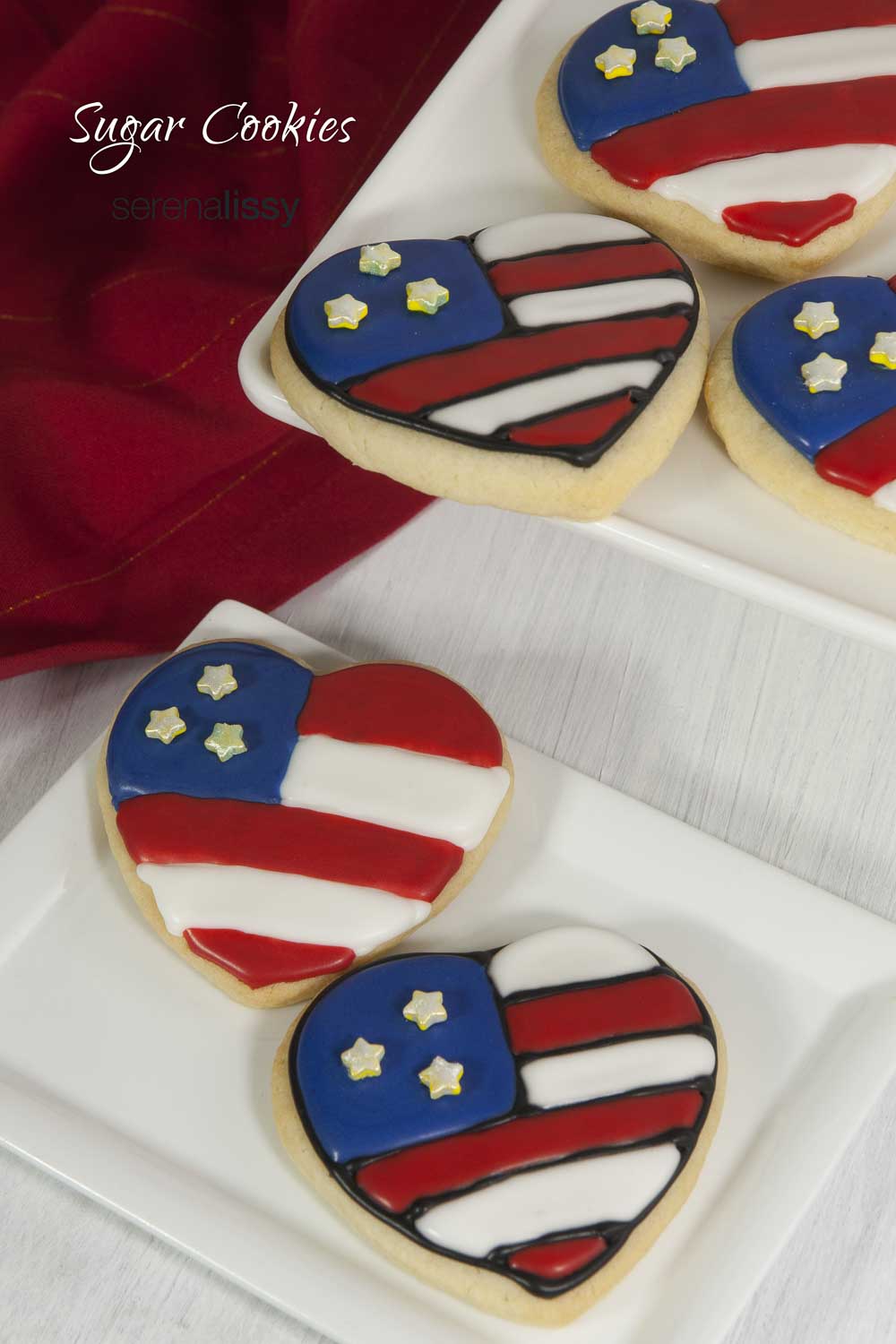
    They are so simple to make and turn out as buttery little bits of heaven. Now, I'm lucky in that I have a boatload of cookie cutters. Or maybe not, if you think about the cabinet space it takes to store these. So this year we have decided that anyone can have sugar cookies with just one cutter. For these cookies we used the heart mold. You could also do the exact same decoration with a round 3" cutter, or even a square cutter. These cookies keep their shapes when baking and come out soft and flavorful, which make them perfect for decorating.

    Sugar cookies on Plate are easy to decorate for any occasion.

    Royal Icing Decorations

    I am going to say that these took a bit of time to prepare. It is best to wait until the icing is dry so it doesn't bleed into other colors. It wasn't that I was working on them the entire time; it's just the drying time. Some of the cookies had a black outline, others didn't. It's entirely up to you on that one. We piped the blue first, then the white, then the red. If you are adding the black outline, do that before the red or white. For the stars, we just used sprinkles. You could easily pipe them or just use silver dots instead if you want them to be easy.

    There is nothing unique about our royal icing recipe you could get probably 500 other versions on line if you prefer, but for the most part, they are all the same.

    Royal Icing:

    2 pounds confectioners sugar
    ¼ cup meringue powder
    2 tablespoons light corn syrup
    1 teaspoon almond extract
    warm water
    gel food color, red, blue and black (if you want borders)

    1.  Add the sugar, meringue powder, corn syrup and almond extract into your mixer bowl.
    2. Slowly add warm water to the sugar mixture and continue to blend on low speed until you have the consistency to pipe. (Adding more water will make it thinner, and less water will be thicker.)
    3. Once you have the consistency you are looking for, separate the icing and add colors. Keep the icing covered, it's important so it doesn't dry out while you are working on the decorations.

    More Cookie Recipes to Try:

    • Frosted Halloween Cookies with Royal Icing
    • Chocolate Butter Cookies
    • Red Velvet Cookies
    • Dulce De Leche Cookies

    Looking for More Recipes?

    Subscribe to my free newsletter to get new recipes in your inbox monthly. Find me sharing new recipes and tips on Pinterest, Instagram or Facebook.

    We know you are going to love this simple and tasty sugar cookies.

    Simple Sugar Cookies

    Sugar Cookies

    Sugar Cookies are great for any occasion and these tasty sugar cookies hold their shape well and are perfect for decorating with royal icing.
    5 from 7 votes
    Print Pin Rate
    Course: Dessert
    Cuisine: American
    Prep Time: 15 minutes minutes
    Cook Time: 10 minutes minutes
    Cooling Time: 3 hours hours
    Total Time: 3 hours hours 25 minutes minutes
    Servings: 12 Cookies
    Calories: 363kcal
    Author: Serena

    Ingredients

    • 13.25 ounces sugar
    • 12 ounces butter
    • 4 eggs
    • 1 teaspoon vanilla
    • 23.5 ounces AP flour
    • 2 teaspoons baking powder
    • 1 teaspoon salt

    Instructions

    • Line a sheet pan with parchment paper.
    • In the bowl of a stand mixer with the paddle attachment, beat the sugar and butter until pale and fluffy.
    • Add the eggs and vanilla and continue to mix until incorporated.
    • In a separate bowl stir together AP flour, baking powder and salt.
    • Add the dry mix into the mixer bowl and hand stir until incorporated.
    • Lay out a large piece of plastic wrap and put ½ of the dough onto the wrap.
    • Cover with plastic wrap and mold into a disk. Do the same with the other half of the dough.
    • Refrigerate for 3-4 hours.
    • Once dough has finished chilling, heat oven to 350°F.
    • Generously dust a clean surface with flour and roll the dough out to ¼ inch.
    • Use a cookie cutter to cut out shapes and a spatula to transfer them to the baking sheet.
    • Bake at 350° for 7-10 minutes or until edges begin to turn lightly golden brown.
    • Remove from oven and let cool on the pan.

    Notes

    Recipe Source: SerenaLissy.com
    This website provides approximate nutrition information for convenience and as a courtesy only. Nutrition data is gathered primarily from the USDA Food Composition Database via Spoonacular API, whenever available, or otherwise other online calculators. While this information can be helpful in estimating the nutritional information of a recipe, it is by no means accurate or official and is not evaluated by the Food and Drug Administration.
     
    All images and content are copyright protected. Do not use our images without prior permission.

    Nutrition

    Serving: 1Cookie | Calories: 363kcal | Carbohydrates: 75g | Protein: 8g | Fat: 3g | Saturated Fat: 1g | Polyunsaturated Fat: 1g | Monounsaturated Fat: 1g | Trans Fat: 1g | Cholesterol: 58mg | Sodium: 317mg | Potassium: 119mg | Fiber: 2g | Sugar: 33g | Vitamin A: 126IU | Calcium: 89mg | Iron: 3mg
    Tried this Recipe? Pin it Today!Mention @SerenaLissy or tag #serenalissy!

    Now if you find you aren't a sugar cookie lover we have a few summer ice cream recipes you might like instead. Have a safe and happy 4th of July!

    As an Amazon Associate and member of other affiliate programs, I earn from qualifying purchases. What that means is if you click on one of our affiliate links they may toss a few pennies our way for a commission.

    7 Tips For Beautiful Food Photography With Your Phone

    June 19, 2021

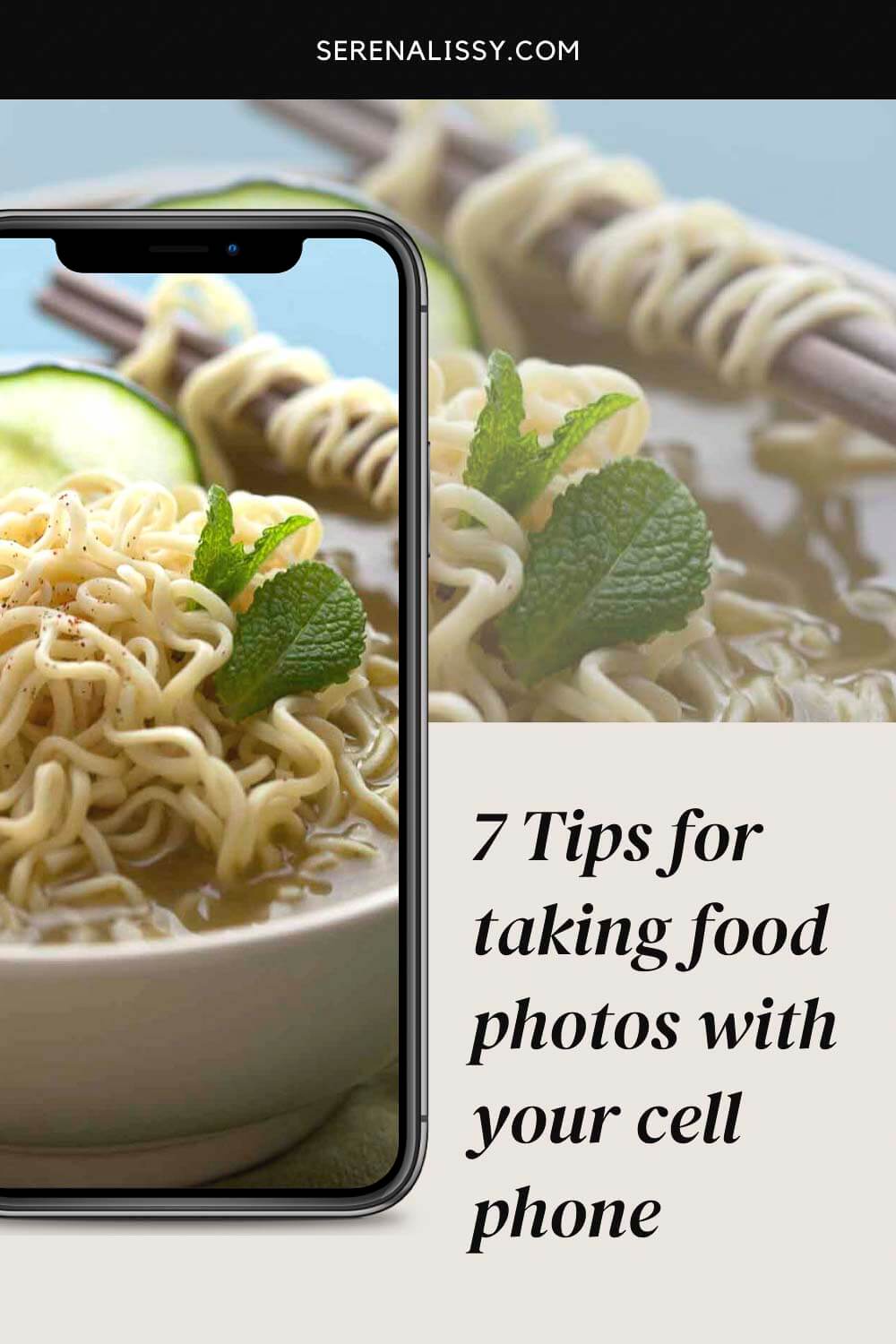
    cell phone taking picture of bowl of noodles

    The food we eat is a daily part of our lives. We take photos of food, post them on our websites and social media, and talk about it with friends and family – so why not make the experience as great as possible? But how do you take the perfect picture with just a smartphone camera? With these 7 tips for beautiful food photography with your phone, you’ll be able to create mouthwatering food pictures for social media or your website in no time!

    cell phone taking picture of bowl of noodles

    Clean The Lens On Your Smartphone

    The first step to taking great food photos with your phone is keeping your camera’s lens clean. The last thing you want is a smudge on the glass that will interfere with the image! Be sure to wipe it down before photographing any of your meals. Try not to touch it again until after you have taken all of your shots. This is one of the best ways to ensure you don't have bad photos.

    Get Closer Instead Of Zooming In

    Digital zoom is a double-edged sword, you might end up with very poor image quality when viewing your photo close. Try to get closer to your subject (I mean walk over and get closer, don't zoom in with the camera) and crop in later in post production. I like to make sure I also stand back a bit to make room for cropping the picture instead of using the entire frame. Food photography with your phone is definitely different than using your DSLR camera with a wide variety of lenses. You can get creative with camera angles, but you won't get the best results by zooming in on camera with the limited lenses on your phone.

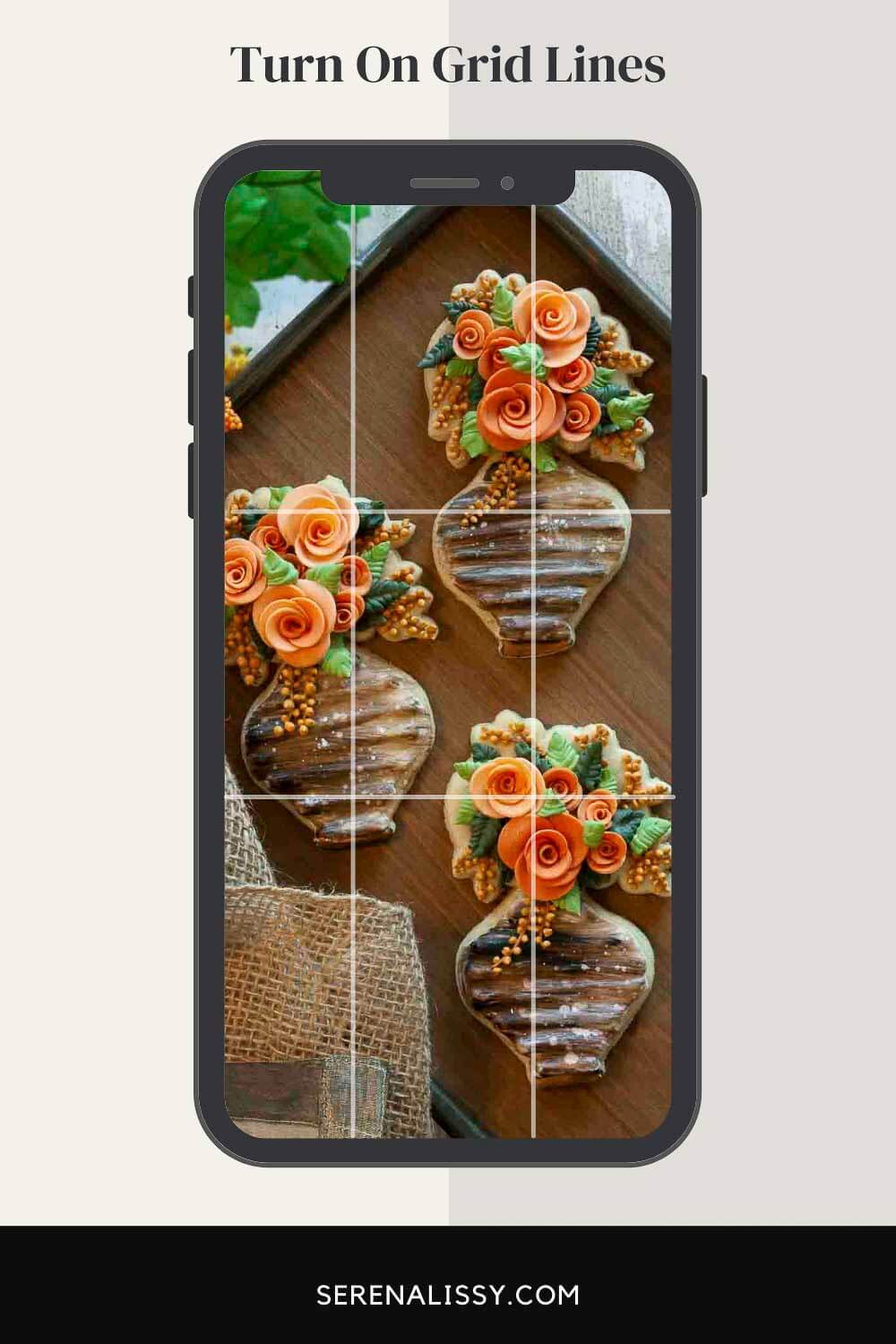
    Cell Phone image with grid lines turned on

    Turn on the Grid Lines

    I'm not sure how many people are familiar with what a "grid" is or does. So let's lay down some groundwork before jumping into that topic! A grid can be defined as an arrangement of horizontal lines and vertical lines forming any number of intersecting square spaces arranged in rows and columns - like those seen above. They're most commonly used to help us line things up evenly (or un-evenly!). This helps make our pictures more balanced looking. With this grid, your camera is set up into thirds. Then, the image's subject is placed at the intersection of those dividing lines or along with one of the lines itself.

    The grid lines can help you compose your food photos to be evenly spaced, with no empty white space to distract the eye. In addition, the lines can help you decide where to balance out your compositions. They are extremely helpful if you want that perfect shot of the cake on the table in front of guests at an event!

    I am always looking for new ways to compose my photography. I love using the grid overlay in the phone's camera settings for this. This allows me to balance out an image before taking it, saving time when editing later on! In addition, they make setting up shots even quicker and easier than ever before.

    Tap On The Main Subject To Focus

    In photography, the focus point is called a "subject." This means to capture your subject well; you need to make sure it's sharp and the main focus. And while this sounds like common sense many people struggle with it. Lots of times, it's because their eyes are drawn away from what's important and onto other things instead!

    One way to make your food photography more appealing is by strategically placing the focal point of your camera on the main subject to draw your viewer's eye to where you want. For example, if you're taking a photo with flowers and a cake in it, put the main focus on either one or both, depending on what's most important for that particular moment. (Hint, we all know it's the cake)

    Shoot In RAW

    If you want to get the most out of your camera, shoot in RAW! The raw format is a lot like digital film because it contains all the information from an image. However, JPEGs are compressed and lose some photo data when they're saved. This means that even if shot with incredible quality settings on your phone (which many phones can do), this info will be lost forever during compression. This also has consequences for edits later. At the same time, smart adjustments make photos look better automatically after shooting them as JPEG. These changes won't show up in those same images if taken as RAW files since there's no lossy conversion at any stage before editing begins.

    In a nutshell, shooting in RAW basically means that the most information possible is retained, meaning you can do a lot of post-processing. On the other hand, JPEGs are compressed and lose some photo data when they're saved - which means copies made from your phone would be less preservable than if taken as raw files since the device's settings will have already stripped them of their detail during compression.

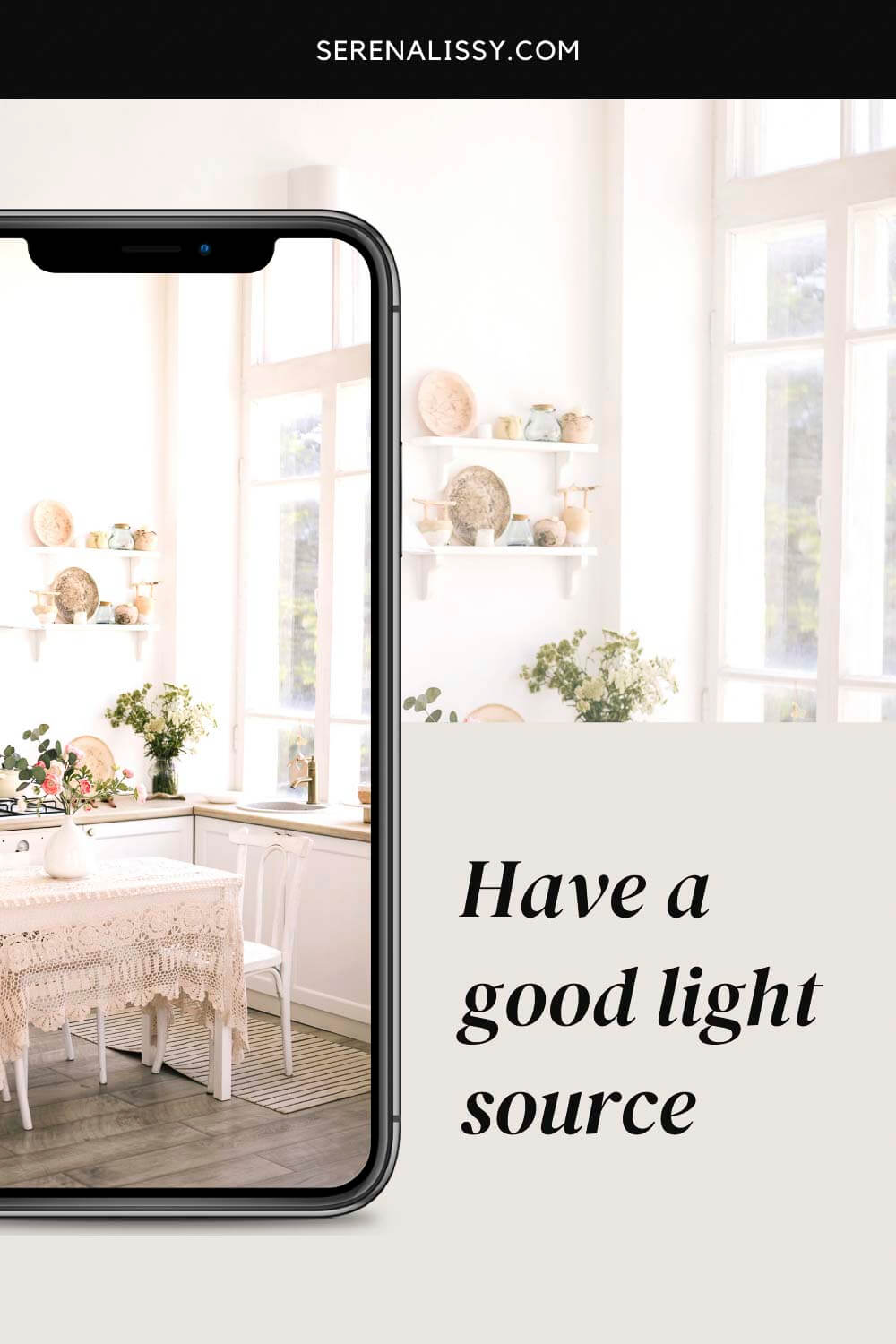
    Kitchen window illuminating the room

    Find a Great Light Source

    From baking cookies in your kitchen with natural light streaming through windows to that perfect plate of food on the dinner table, there's no denying you'll want plenty of light when capturing all those delicious moments!

    If you're looking for something more affordable than investing in expensive professional artificial lighting and equipment (although it certainly can be worth the investment!) I recommend natural lighting. One, it's free, and two, it's beautiful and some of the best light you can get.

    Find a window with good direct sunlight coming through. If it's too bright, try placing a large diffusor like this one between any window or doorway--even a white shower curtain will do. And voila - perfect lighting will highlight every detail on either side of each bite-sized morsel!

    If you're into food photography, it's essential to have the right tools at hand. And I can't stress enough how important it is to have plenty of light! If you find yourself in a low-light situation with no hope of bright light, I recommend a tripod like this one to avoid any blurry photos and camera shake. Cell phones are not very forgiving when it comes to low light. So you want to have every advantage you can when you find yourself in this situation.

    Great Photo Apps

    If you are going to take food photography with your phone, post-processing is the perfect way to enhance your food compositions and make them more vibrant, sharper, and more refined. There are a variety of great smartphone apps for professional looking photography that you can try out! I usually stick with three, but again, there are so many out there to use and they play an important role in your finished image. All three of these apps will work on iPhone or Android phones.

    • Google Snapseed
    • Adobe Lightroom Mobile
    • VSCO

    If you’re looking for ways to take better photos of your food and make the experience as great as possible with a minimalist approach, then these 7 tips will help. With a little patience and some creativity, you can create mouthwatering images that are perfect for social media. You may not be able to afford expensive cameras or gadgets just yet – but with a good camera app on your phone, anyone can take stunning pictures.

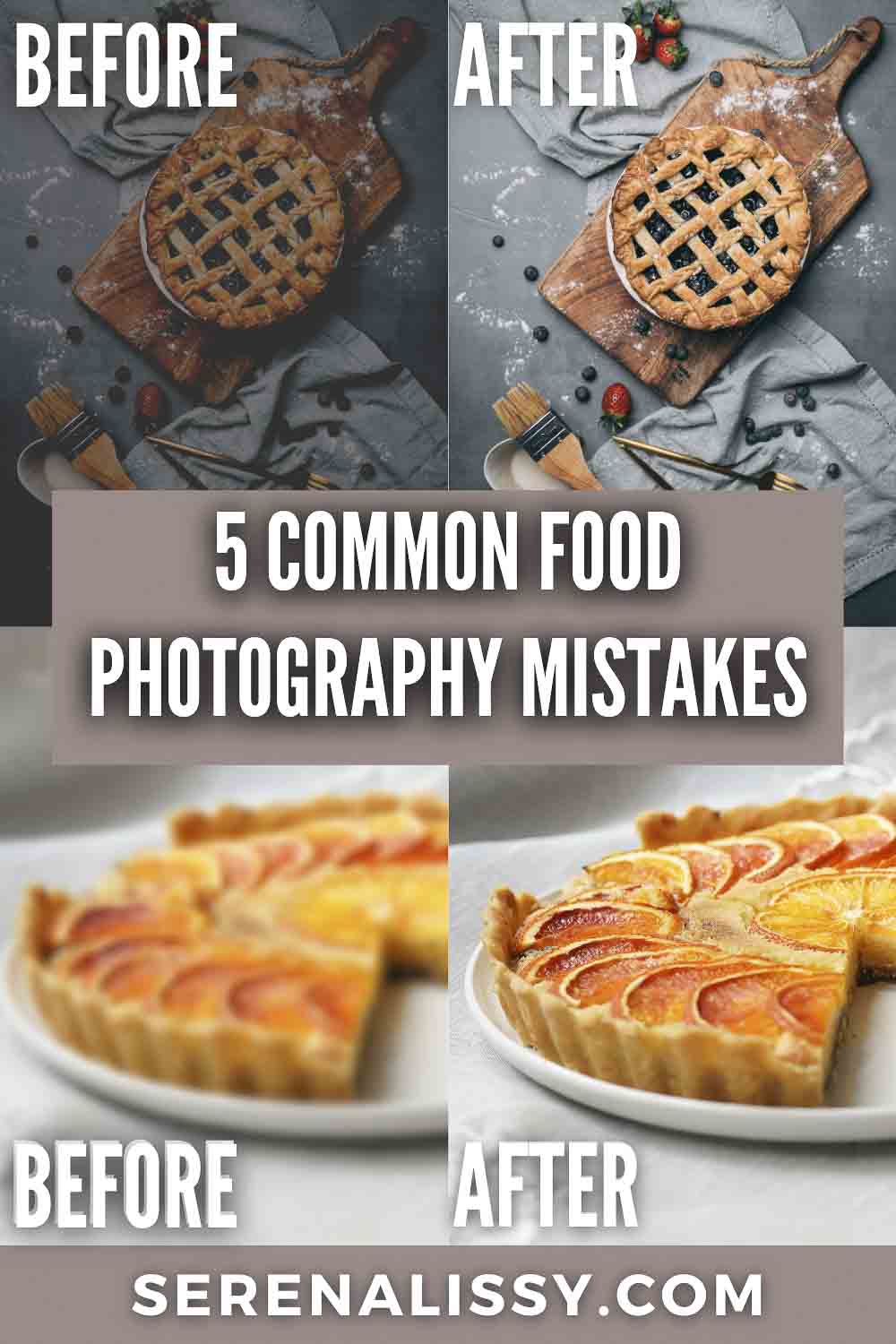
    If you are ready to up your food photography skills, then make sure to practice daily. Experiment with lighting and try using these apps. Also, check out our post on five common food photography mistakes and how to avoid them. Sign up below to learn more about food photography and get notified with new tips.

    Looking For More Food Photography Tips?

    Subscribe to my free newsletter to get new baking tips in your inbox monthly. Find me sharing new recipes and tips on Pinterest, Instagram, or Facebook.

    As an Amazon Associate and member of other affiliate programs, I earn from qualifying purchases. What that means is if you click on one of our affiliate links, they may toss a few pennies our way for a commission.
    15 Food Photography Props You Probably Have at Home

    June 16, 2021

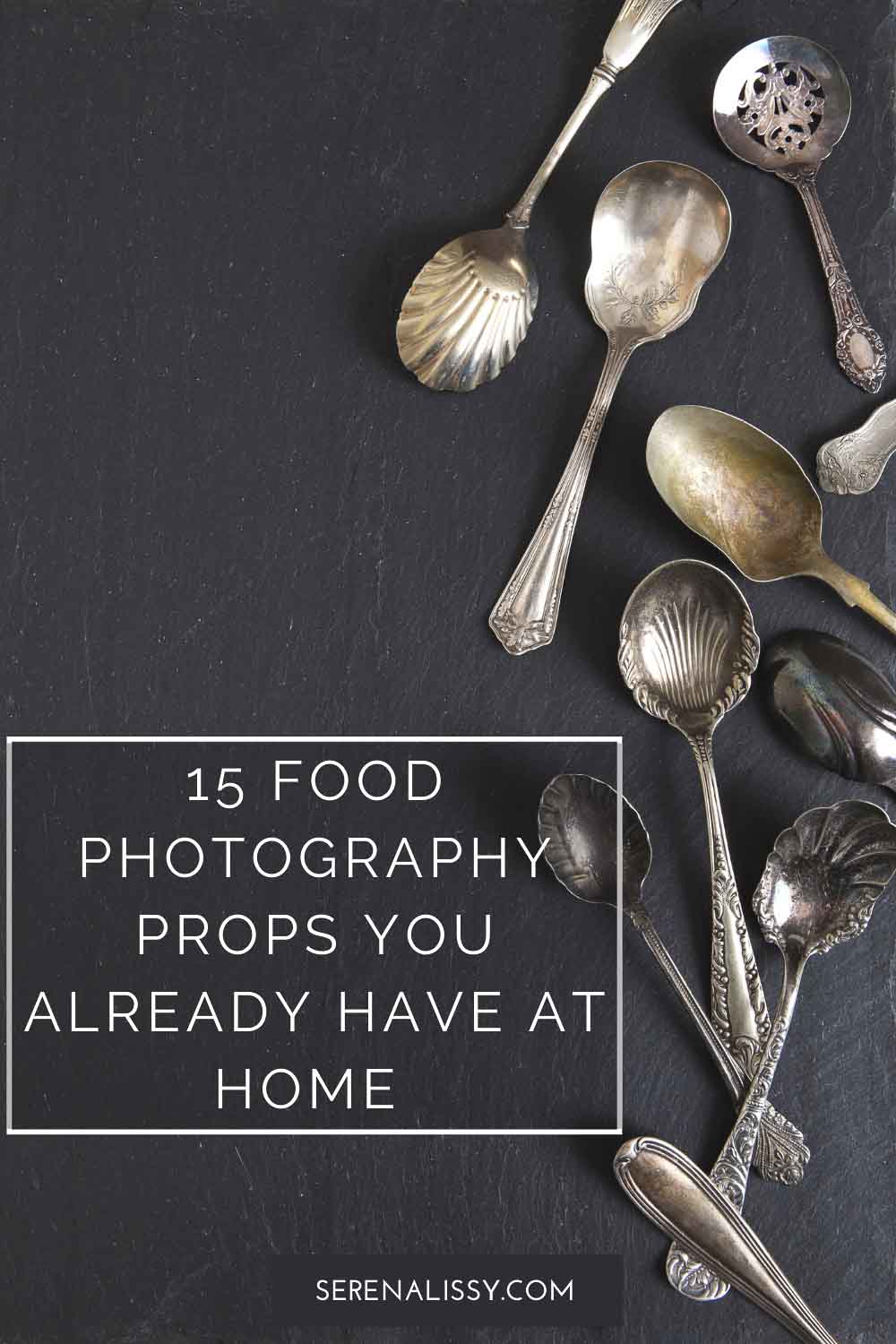
    Vintage spoons laid out on table

    Do you have a tripod? A tablecloth and some flowers? If so, congratulations! You are already halfway to taking amazing food photos in your home. Next, I'll show you 15 food photography props that will make your photos even better - all of which you most likely already have at home.

    As we know, food means different things depending on who you ask. Food is sustenance, food is love, and food can provide comfort and happiness. In America, 30.33 million individuals used at least one baking mix in 2020, and 1.82 million Americans used 7 or more.

    No matter where you fall on that spectrum of baking mix user or chef expertise, I’m sure you’ve experienced salivating over beautiful shots of food photos. Today, we’re diving into 15 food photography props you probably have at home.

    We’ve also explored How to Find The Perfect Props for Your Food Photography via thrift stores, flea markets, and vintage shopping, so get started with today’s ideas while you plan your next shopping trip.

    Vintage spoons laid out on table

    Wrapping Paper

    Wrapping paper isn't just for gifts or holidays! Paper can serve as the perfect backdrop or table covering in your food pictures. Of course, you may want to save the reindeer paper for holiday-inspired bakes or the "Happy Birthday" paper for a specially baked cake.

    But if you have any other assortment of cute or elegant wrapping paper, these are perfect for various backdrop creations and even a small size patchwork of paper stacks to create depth in a photo.

    Parchment Paper

    Parchment paper is also an easily overlooked prop that can add texture to a photo while cementing the viewer in a lived-in kitchen. Don't be afraid to use bits of paper that may have gotten wrinkled in the bake! It provides great visual interest when you have fresh from the oven items sitting on baked parchment paper. I love how the parchment turns into very light brown paper. It's an easy way to direct your viewer's attention to a specific place in the photo.

    Seasonal Decorations as Props

    While wrapping paper comes in countless styles and designs, seasonal decorations are perfect, too, for themed bakes. Classic gingerbread can galavant with snowmen statues, and zombie cupcakes can sit alongside prop pumpkins. With the right props, you could easily take care of all your holiday photos. One of my personal favorites is a stuffed easter bunny holding cookies or candy.

    Hand Towels

    Have you considered your dish towels, or a tea towel, as more than a tool to keep your hands clean and dry? Of course, this won't work if you're currently reusing scraps for towels, but an elegant dish towel can serve a dual purpose as a backdrop for your food photos.

    Fold your cloth napkins with neutral colors into a square or rectangle and place your plate of food on top for a more three-dimensional shot.

    Measuring Cups and Spoons

    What baker doesn't have or want a classy, beautiful set of measuring cups and spoons? These gorgeous kitchen tools make the perfect food photography props.

    If you have a few, these serve as multi-functional tools and props. For example, you can fan out spoons aesthetically or leave a cloud of flour sprinkled in a cup for a more lived-in feel.

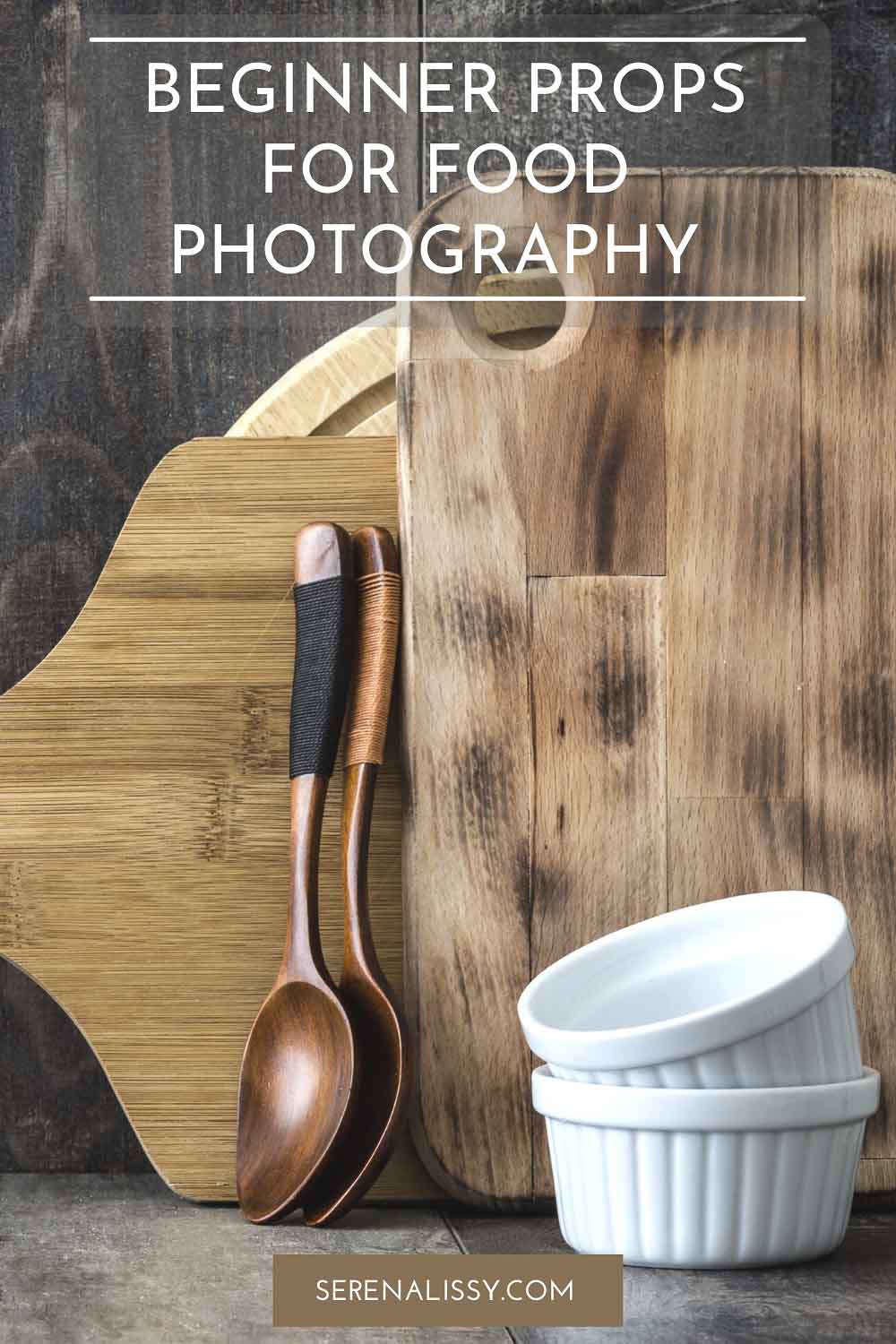
    Cutting Board, Ramekins and spoons stacked on counter

    Paper Straws

    Paper straws are not only good for the environment but are aesthetically pleasing, too. These are easy to incorporate if you're taking photos of delicious drinks. If it is a summer drink, you might want to seek out bright colors on the straws.

    But even if you're focusing on food, adding a glass of ice water with a lemon slice and paper straw is beautiful, too.

    Coasters

    From affordable coasters meant to save tables from stains to beautiful artisan coasters crafted by Etsy sellers, any coaster can serve as a beautiful food photography prop. Use these as standalone props or arrange them to make a collage backdrop. Depending on colors and design, you can really let your personal style come through with these.

    Twine

    Twine can surprisingly give a vintage and lived-in look to any food photo. Most commonly used to bind meat in the kitchen, you can aesthetically use butcher's twine to create twisted designs or tie asparagus or other greens together. This is one of my favorite props.

    Baking Trays

    What's baking without a tray? Sometimes a food shot straight out of the oven, tray-included, is the best. You can also arrange trays together for a textured backdrop or background setting. I like to find my baking trays from my local thrift store. It ensures it has a used look instead of a nice and shiny never been used tray.

    Mason Jars

    Who doesn't love a beautiful mason jar? Set these up in the background next to a sunny window, and you'll be able to manipulate some great natural light for a glowing effect on your baked goods. They are also a great option to display flowers for your photograph.

    Outdoor Leaves

    Okay, yes, this one is a little out there...as in outside! But nothing beats a classic green leaf or nature shot. So grab a few leaves from outside, rinse them in your sink, and you'll have a forest fairy garden-themed shoot in no time. Alternatively, any plants you have indoors, including fake ones, are creative ways to get an extra splash of color and freshness.

    Just be wary about getting these too close to the food!

    Unique Cutlery

    Sometimes, we look at a knife or food set in a store and think...is that what I think it is?

    But whether it's a super chunky fork or a lace-patterned spoon, unique sets of kitchen utensils can make the perfect prop in food photoshoots. You can even pick one piece in particular to be a regular Easter egg in your shots.

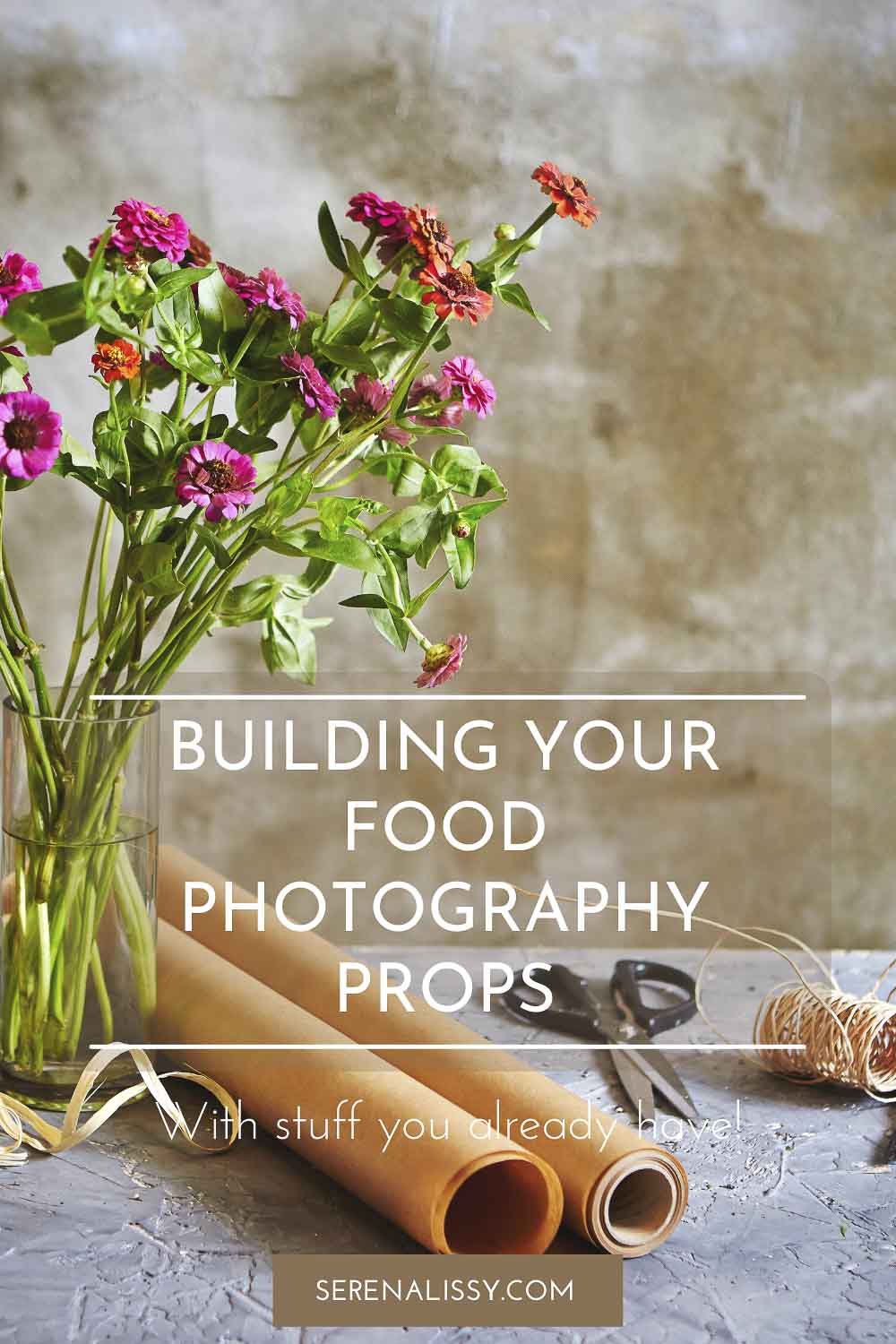
    Flowers, wrapping paper, twine and scissors on table

    Cutting Boards

    Cutting boards, unique or not, are also extremely handy backdrops and surfaces for food photos. One of the easiest food photos to take is a simple shot from above, looking down on your cutting board and surrounding countertop! I'm a fan of wooden cutting boards, I love the texture and grain of the wood, and they don't take up a lot of storage space.

    Crumbs & Purposeful Messes

    Messes are time-consuming and disappointing, but sometimes beautiful. I know, there's nothing like a pristine and clean workstation. But the thought of a slightly flour-covered countertop and honey-covered spoon is also the promise of something delicious to come.

    Take a look at some of your messes from behind the camera, and you might find the perfect creator's touch for your next photo. For chefs, it's a good idea to make more than one serving of a dish or pair your dishes with sides, like a slice of baguette or a small salad on simple plates.

    Other Food!

    Finally, probably the best prop for your food photography is other food! Because why have one good dish when you could have 15?

    For bakers, this is a bit easier to accomplish with recipes that include multiple servings: you can use cake slices in the backgrounds for your main subject, the cake, and pies the same way. You can also rotate items between being the focus of a shot and in the background. This can give you a beautiful photography series of each item and give viewers a taste for your range.

    Food Photography Props without the Cost

    No matter where you are in your food photography journey, you likely have plenty of beautiful food photography props that you can repurpose to get started. A pile of napkins, some bowls, and a few cookie cutters in your kitchen, all simple items that really make your food photography stand out. With the help of these simple items, you're halfway to being on your way to becoming an Instagram-famous food photographer! Ready to learn more about food photography techniques and even explore our deliciously baked recipes? Read more here on SerenaLissy.com.

    Five Day Food Photography Challenge

    Want to take your food photography up a notch?

    I’ve been photographing food for years and have learned some tricks of the trade. Join me on this 5-day challenge where you’ll learn how to master the art of food photography, one bite at a time. You’ll be amazed by what you can do with just a few simple tips. You will learn how to make your photos pop with color, texture, and lighting. Sign up today!

    Looking for More Recipes?

    Subscribe to my free newsletter to get new baking tips in your inbox monthly. Find me sharing new recipes and tips on Pinterest, Instagram, or Facebook.

    As an Amazon Associate and member of other affiliate programs, I earn from qualifying purchases. What that means is if you click on one of our affiliate links, they may toss a few pennies our way for a commission.
    Texas Sheet Cake

    June 14, 2021

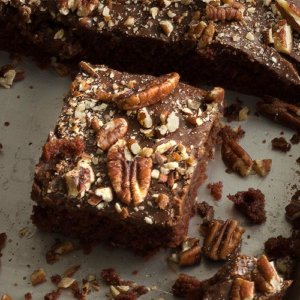
    Texas Sheet Cake in Pan

    If you're looking for a recipe that is moist, rich, and will please any crowd…look no further than this Texas Sheet Cake Recipe. Texas Sheet Cake is a classic southern recipe that's easy to make and full of flavor. This cake has all the features of your favorite chocolate sheet cake with an extra sweet and crunchy touch from toasted pecans on top! The perfect dessert for your next party or family get-together.

    Texas Sheet Cake in a jelly roll pan topped with pecans.

    What is a Texas Sheet Cake?

    There are a lot of stories about the origin of Texas Sheet Cake, but many indicate a similarity to a recipe that appeared in the Dallas Morning News in 1957. Of course, its name is also likely inspired by the cake's large size. It seems that everything is bigger in Texas--cake included. Cooked in a massive jelly roll pan this cake is perfect for serving at large gatherings.

    My First Sheet Cake

    I have been coming back and forth from California to Texas for well over a decade. I have now lived in Austin for quite a while and in all this time I have never had a Texas Sheet Cake. And I probably would not have had one if it weren't for Bake from Scratch magazine. Which I must say, I'm slightly obsessed with.

    Since this is the first recipe from the magazine that I have tried and also my first Texas sheet cake, I left the recipe exactly as written.  I wanted to see how their recipes were written, to know if they were easy to follow, and most importantly, if they worked.

    This recipe did not disappoint. At first, I thought it was just going to be too sweet. But the flavors all came together and it turned out to be a nice, rich, fudgy cake. Put on some warm chocolate frosting with a spread of toasted pecans...How could it really be bad?!?

    Ingredients for The Cake

    Ingredients for Texas Sheet Cake

    Just like the cake, this is a sizable list of ingredients, but you should have most in your pantry and the whole thing comes together very easily.

    • Granulated Sugar
    • Water
    • Canola oil
    • Whole buttermilk
    • Unsalted butter
    • Eggs
    • Vanilla
    • All-purpose flour
    • Unsweetened cocoa powder
    • Ground cinnamon
    • Baking soda
    • Kosher salt
    • Toasted pecans
    • Whole milk
    • Confectioners sugar

    How to Make Texas Sheet Cake

    Texas Sheet Cake Process
    • In a bowl: Mix together sugar, water, canola oil, buttermilk, butter, eggs, and vanilla.
    • In a second bowl: Mix together cocoa powder, cinnamon, baking soda, and salt.
    • Combine: Gradually add flour mixture to sugar mixture.
    • Pour into sheet pan: Pour mixture into prepared sheet pan and spread with a spatula.
    • Bake: At 400° for about 20 minutes, until cake springs back when lightly touched.

    How to Make the Frosting

    • In medium saucepan: Combine butter and milk cooking slowly until butter is melted.
    • Whisk in: Powdered sugar, cocoa powder, vanilla, salt and cinnamon.
    • Pour over: The chocolate cake while still warm. Spread with spatula and top with chopped pecans.

    Is a Sheet Cake the Same As a Regular Cake?

    Close but not the same. The main difference is the size of the pan. A sheet cake is usually cooked in a 15 x 10 jelly roll pan. A regular cake is usually cooked in a 9 x 13 cake pan.

    Do You Need to Refrigerate The Cake?

    No it's not necessary. It may last a little longer if covered and stored in the refrigerator. Now if you actually live in Texas where it is warm and humid, I'd suggest the refrigerator.

    More Cake Recipes To Try

    • Chocolate Cake with Earl Grey Buttercream
    • Simple & Easy Sugar Cookies
    • Red Wine Chocolate Cupcakes
    • S’mores Cake

    Would I Make It Again?

    I'm excited to report that the recipe worked, it was easy to follow and had no glaring errors. You know the kind... The ingredient list has listed 2 cups of sugar, but the directions to make the recipe only uses 1 cup of sugar. I have no doubt everyone reading this has experienced this at least once in his or her life. From my time at America's Test Kitchen we saw that a lot when researching and testing recipes from other sources.

    So I hope you like this cake as much as we did. I will say, it would make a great 4th of July dessert if you find yourself needing one. If you are looking for other simple and quick recipes you could try Apple Cinnamon Muffins or even more simple are our Special K Bars. If it's summer and it's just too hot to turn on your oven, you could always go with Chocolate Chunk Ice Cream.

    Please let us know if you make the recipe and how it turns out for you. We are going to continue with our Friday food reads, so please follow along as we work our way through our cookbooks to test and try recipes.

    Looking For More Recipes?

    Subscribe to my free newsletter to get new baking tips in your inbox monthly. Find me sharing new recipes and tips on Pinterest, Instagram, or Facebook.

    Piece of Texas Sheet Cake

    Texas Sheet Cake

    Moist chocolate cake is topped with creamy, fudgy chocolate frosting and chopped pecans. This Texas-sized cake is perfect for large gathering and will satisfy any chocolate-lovers cravings.
    5 from 13 votes
    Print Pin Rate
    Course: Dessert
    Cuisine: American
    Prep Time: 11 minutes minutes
    Cook Time: 20 minutes minutes
    Cooling Time: 30 minutes minutes
    Total Time: 1 hour hour 1 minute minute
    Servings: 35 pieces
    Calories: 176kcal
    Author: Serena

    Ingredients

    Cake

      Bake From Scratch

      • 2 cups granulated sugar
      • 1 cup water
      • ½ cup canola oil
      • ½ cup whole buttermilk
      • ½ cup unsalted butter melted
      • 2 large eggs lightly beaten
      • 1 teaspoon vanilla extract
      • 2 cups all purpose flour
      • ⅓ cup unsweetened cocoa powder
      • 1 teaspoon ground cinnamon
      • 1 teaspoon baking soda
      • ¼ teaspoon kosher salt
      • 1 cup chopped toasted pecans

      Frosting

      • ½ cup unsalted butter
      • ⅓ cup whole milk
      • 1 pound confectioners' sugar
      • ⅓ cup unsweetened cocoa powder
      • 1 teaspoon vanilla extract
      • ¼ teaspoon kosher salt
      • ¼ teaspoon ground cinnamon

      Instructions

      • Preheat oven to 400° F. Spray a 15x10 inch jelly roll pan with baking spray and then dust with flour.
      • In a large bowl, whisk together sugar, 1 cup water, oil, buttermilk, melted butter, eggs and vanilla until smooth.
      • In a medium bowl, whisk together flour, cocoa, cinnamon, baking soda and salt. Gradually add flour mixture to sugar mixture, whisking until smooth. Pour batter into prepared pan.
      • Bake until cake springs back when lightly touched in center, about 20 minutes. Pour warm chocolate frosting over the cake, spreading with a spatula. Sprinkle with chopped pecans.
      • Let cool completely before serving.

      Frosting

      • In a medium saucepan, combine butter and milk. Cook over medium low heat, stirring occasionally, until butter is melted. Whisk in confectioners sugar, cocoa, vanilla, salt and cinnamon until smooth. Use immediately.

      Notes

      Recipe Source: SerenaLissy.com
      This website provides approximate nutrition information for convenience and as a courtesy only. Nutrition data is gathered primarily from the USDA Food Composition Database via Spoonacular API, whenever available, or otherwise other online calculators. While this information can be helpful in estimating the nutritional information of a recipe, it is by no means accurate or official and is not evaluated by the Food and Drug Administration.
       
      All images and content are copyright protected. Do not use our images without prior permission.

      Nutrition

      Serving: 1Piece | Calories: 176kcal | Carbohydrates: 32g | Protein: 2g | Fat: 11g | Saturated Fat: 4g | Polyunsaturated Fat: 2g | Monounsaturated Fat: 5g | Trans Fat: 1g | Cholesterol: 24mg | Sodium: 74mg | Potassium: 58mg | Fiber: 1g | Sugar: 12g | Vitamin A: 187IU | Vitamin C: 1mg | Calcium: 16mg | Iron: 1mg
      Tried this Recipe? Pin it Today!Mention @SerenaLissy or tag #serenalissy!

      As an Amazon Associate and member of other affiliate programs, I earn from qualifying purchases. What that means is if you click on one of our affiliate links, they may toss a few pennies our way for a commission.

      Dessert Person: A Cookbook Review

      June 11, 2021

      Friday Food Reads Illustration

      There are many cookbooks in the world. Millions of them all telling you how to make a perfect dish or dessert. But what if I told you that there was one cookbook with recipes and findings that would make your mouth water? What if I told you it had pictures for every recipe and even some great tips as well? This is not just any cookbook though - It's a Dessert Person Cookbook!
      Our review of Dessert Person by Claire Saffitz will give you an overview of the book, as well as an overview of two recipes we baked from it. We hope you enjoy the next edition of our Friday Food Reads series.

      Loaf of Babka with a slice cut out

      About The Author, Claire Saffitz

      Anyone that believes every meal should end with something sweet is my kind of person! Claire Saffitz is a dessert person. Not only does she love eating them, but she also loves making them. She wants to empower home bakers to work with new ingredients, attempt new techniques, and bake with more confidence. All the same things we strive to do at our Sweet Academy. I love that she spends the time to explain the hows and whys in the recipe. She doesn't go fancy with the desserts, and I like that she prefers sharable desserts.
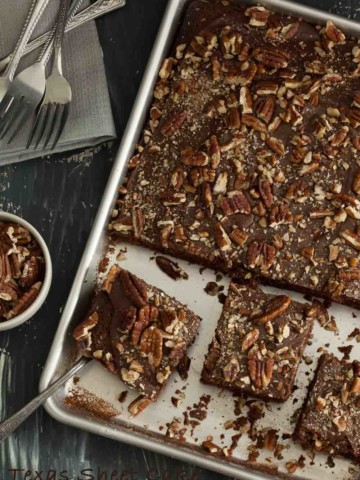
      Recipe For Success

      Each recipe in the book comes with a difficulty rating of 1 to 5. One being very easy, and five being very challenging. The recipes in each chapter are organized by easiest to most difficult. So if you are new and nervous, start with the first recipe in the chapter and work your way through it.

      I also love that she gives baking times, but also gives you an indicator of how it should be looking to test for doneness.

      There are lots of great techniques and tips for something as simple as filling a pastry bag or how to brown butter.

      How The Book Is Broken Down

      The book has seven chapters. Six are broken out in categories like loaf cakes, pies and tarts, bars and cookies, layer cakes, etc. The seventh chapter is full of her foundation recipes which get used throughout the book. I think every recipe has images of the final product and also a few with process shots. I love when they include the final product shot. It really does let me know what I'm striving for.

      Two loaves of speculoos Babka

      Speculoos Babka

      This was the first recipe I made from the book. And I will say it was delicious. I'm someone that could eat speculoos daily, although I don't, I could. The babka was made with the base recipe of sweet yeast dough. I'm a big fan of chocolate babka, so I figured why not. She provided some do ahead tips, what to do if I only wanted one loaf and not two...really?!? Of course I wanted two!

      I'm going to say she warns you that this will rise in the oven, and boy did it ever. If I were to make any changes to this recipe, I would reduce cinnamon. It felt a bit overpowering, and I was missing more of the speculoos flavor. Be sure to follow her instructions for the rising size, and you will have a loaf you love.
      Slices of Rhubarb Cake on a cutting board

      Rhubarb Cake From Dessert Person

      The second recipe we made was this gorgeous rhubarb cake. I am a rhubarb person! I know there are rhubarb haters out there, but I can't resist that delicious tart flavor from cooking with the vegetable in desserts. The cake is moist and light on top of being sweet enough to satisfy anyone's tastebuds who crave something more than vanilla or chocolate flavors all the time. This dessert got two stars for difficulty because you had to cook the rhubarb first before adding them into your batter - which as any experienced baker knows takes up some extra time and energy.
      This would be rated as one of our favorites since she gives clear visual cues about how done everything should be when checking on them, so there's no guesswork involved… My finished cake was completed about 20 minutes less than her cooking time suggested. So be sure to follow the visual queues.

      Should You Buy Dessert Person?

      The Dessert Person Cookbook is a great addition to any cook’s library. It has recipes for every occasion and even some helpful tips on how to get through those pesky recipe steps without losing your mind in the process! If you are looking for a new dessert book or just want something that might make your mouth water, this could be it. I would recommend giving it a try if you have been searching high and low for an amazing dessert cookbook with tons of tasty recipes-because the Dessert Person Cookbook should definitely satisfy both cravings!

      Other Friday Food Reads

      • Pie Camp
      • Friday Food Reads – The Good Book of Southern Baking
      • Now For Something Sweet
      • 100 Cookies

      Looking For More Recipes?

      Subscribe to my free newsletter to get new baking tips in your inbox monthly. Find me sharing new recipes and tips on Pinterest, Instagram, or Facebook.

      As an Amazon Associate and member of other affiliate programs, I earn from qualifying purchases. What that means is if you click on one of our affiliate links, they may toss a few pennies our way for a commission.

      Five Common Food Photography Mistakes

      June 9, 2021

      Photography Mistake shown using pastry

      I'm not telling you anything new when I say food photography is a tricky business. The food has to look delicious, the photographer has to be creative and skilled in all sorts of lighting situations, and the light doesn't always cooperate. For these reasons, it's easy for mistakes to happen on set - even for professional photographers. We will review five common food photography mistakes that many people make and how you can avoid them on your journey to becoming a master photographer.

      We all know photography is powerful. Food photos can make you salivate and even heighten your profit margin, whether you benefit from selling baked goods directly or from sharing your knowledge with others. Marketers who create their own original photographs reach their goals faster than those using stock imagery, with 40% of the previous hitting their goals on time compared to only 13% of the latter. Personality and authenticity are at the core of almost every product and creation, and your audience responds to that!

      Pastry on Plate showing photography mistake

      1. The Most Common Mistake is Bad Lighting

      It would be hard to overestimate the importance of lighting in photography in general, including food photography. Unfortunately for many of us, our kitchen or living room overhead lights aren’t suitable for proper lighting.

      Many lights are tinted yellow, which can change your beautiful wedding cake from looking like a frosted dream to a week-old crust. If you are someone that photographs in the evenings or live in places where you don't always get great sunlight, one of the simplest ways to fix bad lighting is to invest in a lightbox. 

      What's A Lightbox?

      A lightbox is an empty box with all-white sides, and a white backdrop, often with white LED or other lights attached to the top. This creates an insulated photography box for your items and is the most reliable way to get good lighting in every shot. It's great for small-scale food photographs. Most of these economical lightboxes are only 20" x 20". So when I say small-scale, that's what I mean.

      A lightbox lets you control the light sources and any color cast from your kitchen making it both affordable AND effective! Now that's a win-win.

      Lightboxes range from $20 to hundreds of dollars and are definitely worth a buy if you are planning to take food photos regularly. It's an easy way to make sure you have enough light to take a quality photo.

      You Can Use Natural Light

      Another way to up your image quality is to work with natural light and it's free! Many food photographers use natural light, and it can be gorgeous. The most important thing to learn about natural light is how to tame it and work with it.

      While color mistakes and some lighting can be fixed when editing photos, this is time-consuming, and editing for white balance can throw off non-white sections of a photo. It's always best to capture it properly in the camera than trying to fix it later.

      In a pinch? While it may take a bit more work on your part, you can make a makeshift lightbox at home using white poster boards and natural sunlight. The best way to use this is to set these up at a natural light source, such as by a window, and you’ll be set. Just make sure that the cake doesn’t fall!

      2. Hazy or Fuzzy Photos without Focus

      Another common mistake in food photography is having an improper focus on the food or props around your subject. This can become more difficult with food items that come in many pieces, such as a set of cookies vs. a slice of cake. It can also come from just typical mistakes with camera usage. I'm a firm believer in the use of tripods to help to keep things in focus. Now sometimes, a bit of blur can be great to guide a viewer's eye. Blur that is created from your aperture settings is not the blur I'm speaking of here when I say fuzzy images.

      With a slice of cake or even a full pie, it’s easy to tell if your food item is in focus! But with a plate of macaroons or a tray of brownies, a few pieces may be in focus while others fall to the wayside. And there is nothing worse than taking your SD card to the computer to discover your hero is blurry. Most of the time, your editing process can not fix this.

      Practice Your Compositions

      If you are new to photography, one way to fix this problem is to dedicate your photo session to one type of photography composition. This keeps you from constantly moving around and having to reset your shot. Determine what you want to be the focal point of the image, then, for example, take photos from The Diner’s View composition, viewing food as you would while sitting at a restaurant at a slight angle, will help the camera naturally focus on items in the forefront of the photo.

      Taking a top-down shot of a plate of cookies might be more difficult since a camera in automatic shooting mode may struggle to hold all of the cookies in focus. Learning how to shoot in more manual camera modes, such as shutter or aperture priority modes, is ideal for more intricate shoots.

      However, choosing and sticking with a shot composition can get you extremely far. “Dehaze” and “clarity” tools in your photo editing software can fix slight problems with camera focus, but nothing can beat a properly focused photo.

      Photography Mistake shown using pastry

      3. Zero-Effort Plating

      It can be hard to convince ourselves to buy things we don’t "need." But unfortunately, our 5+ year old plates with small cracks and stains won’t cut it when it comes to food photography. Neither will our coffee table with stains or our dinged kitchen counter!

      Thankfully, beautiful food plating doesn’t have to cost a fortune. Look for vintage neutral plates and cutlery at a thrift store near you, or consider buying a new, unstained, but affordable plate from a discount dollar store or a neighborhood Walmart. There are so many great places to get economical props and plates.

      Sure, plating, silverware, and cute lace backdrops may cost you some money upfront, but they can be used over and over again or for beautiful layerings of food photos. With proper care and storage away from regular eating supplies, you can use them for years to come.

      4. Overcropping Photos

      One of the biggest beginner mistakes in food photography is taking photos too close to the food. Yes, we want to see the details of your acai bowl or finely decorated strawberry cake, but if a single banana slice or icing frill takes up ⅛th of the photo, you might be too close!

      Make sure that your baked goods are identifiable in each of your photoshoots. This will often mean that you have to include some plating and backdrops in your photo with the help of your thrift and affordable shopping.

      It’s perfectly fine (and even preferable) to include a super close-up photo or two in recipes or descriptive parts of a blog post. Still, you always want your main photos to be identifiable great photos.

      5. Over Styling Photo Compositions

      Are we supposed to look at that glorious, sequined napkin or the simple vanilla cupcake? Sometimes, we all get a bit overzealous in our decorating of a shot that we end up overshadowing the main subject! Remember, we can only have one hero in our image. And it's a good idea that it be the food. It's a food image we are working on, not a product shot for the napkin company.

      I know; we just talked about zero-effort plating as a problem. But there’s a balance to be had, and it’s not too challenging to achieve it!

      When styling your photos, ensure that your food products are the first thing that stands out to a viewer. Grab a friend or coworker to double-check this. Another rule of thumb is to make sure that your food items are the most vibrant items in the photo. Stay away from pattern-heavy props or useless gadgets that provide no purpose to the image. And only use one or maybe two splashes of different colors.

      Acing Your Food Photography

      Whether you are a professional baker, beginning chef, or food photographer, acing your food photography is all about practice and a smart assembly of tools. Now that you know of five of the most common mistakes in food photography dive into our best tips for taking great food photos here on SerenaLissy.com.

      Five Day Food Photography Challenge

      Want to take your food photography up a notch?

      I’ve been photographing food for years and have learned some tricks of the trade. Join me on this 5-day challenge where you’ll learn how to master the art of food photography, one bite at a time. You’ll be amazed by what you can do with just a few simple tips. You will learn how to make your photos pop with color, texture, and lighting. Sign up today!

      Looking For More Photography Tips or Recipes?

      Subscribe to my free newsletter to get new baking tips in your inbox monthly. Find me sharing new recipes and tips on Pinterest, Instagram, or Facebook.

      Food Photography Mistake Examples

      As an Amazon Associate and member of other affiliate programs, I earn from qualifying purchases. What that means is if you click on one of our affiliate links, they may toss a few pennies our way for a commission.

      • « Go to Previous Page
      • Go to page 1
      • Interim pages omitted …
      • Go to page 3
      • Go to page 4
      • Go to page 5
      • Go to page 6
      • Go to page 7
      • Interim pages omitted …
      • Go to page 17
      • Go to Next Page »

      Primary Sidebar

      Hi, I'm Serena!

      Join us and you will learn all sorts of creative techniques from baking to food photography that is easy enough for a novice to recreate at home, but look and taste like they were made by a seasoned pro.

      Get Inspired, Cook Confidently, Eat Well

      More about me →

      Ice Cream Recipes

      • Scoop of chocolate mint ice cream in bowl with ice cream cone
        No Churn Chocolate Mint Ice Cream
      • Bowl of key lime pie ice cream with a spoon
        No Churn Key Lime Pie Ice Cream
      • Apple Ice Cream in a waffle cup
        Apple Ice Cream
      • Chocolate Chunk Ice Cream In A Bowl
        Chocolate Chunk Ice Cream
      • Frozen Greek Yogurt from your Instant Pot
        Instant Pot Frozen Greek Yogurt
      • Avocado Ice Cram In a serving Bowl
        Easy Avocado Ice Cream Recipe

      Popular Recipes

      • Jamaican Sweet Potato Pudding
        Jamaican Sweet Potato Pudding
      • Peanut Butter Fudge Cups
        Peanut Butter Fudge Cups
      • Samoas on a plate
        Make at Home Samoas - Homemade Samoas: Girl Scout Cookies
      • Italian Chocoalte Walnut Cake
        Italian Chocolate Walnut Cake (Torta di Noci)

      Photography Challenge

      Master The Art of Food Photography

      Footer

      ↑ back to top

      About

      • Privacy Policy

      Newsletter

      • Sign Up! for emails and updates

      Contact

      • Contact

      As an Amazon Associate, I earn from qualifying purchases.

      Copyright © 2023 Serena Lissy